Section heading
פסק ולגרמיה
Paseq and legarmeh
Sub-section א: definition of paseq and legarmeh
א. פסק ולגרמיה: קו מאונך בסוף תיבה בא כדי להפריד אותה קצת מהתיבה שלאחריה.[B+0] אם בתיבה הראשונה יש טעם מחבר, אז הקו בא כדי להורות לקורא שיש להפסיק במעט בין שתי התיבות למרות הטעם המחבר ביניהן. במקומות האלה הקו האנכי נקרא "פָּסֵק". קו של פָּסֵק אינו חלק מהמערכת המוזיקלית של הטעמים אלא תוספת לה.[B+1]
א. Paseq and legarmeh: A vertical line at the end of a word [can have one of two meanings. Each meaning calls for its own type of slight audible separation between the words that the line visually separates].[B+0] If the first word has a conjunctive accent, then the line indicates to the reader that there should be a slight pause between the two words despite the conjunctive accent joining them. In these places, the vertical line is called “paseq.” A paseq line is not part of the musical accentuation system but rather an addition to it.[B+1]
Sub-section א continued: definition of legarmeh
אבל אם הקו בא לאחר הטעם "מונח" בכ״א הספרים, אז במקומות רבים הוא הופך אותו ל"מֻנָּח לְגַרְמֵיהּ", כלומר: מונח שהוא טעם מפסיק (למרות שֶׁמֻּנָּח הוא בדרך כלל טעם מחבר). בשונה מִפָּסֵק, במונח לגרמיה הקו המאונך אינו מורה שיש להפסיק מעט למרות הטעם המחבר. אלא הוא מורה שהטעם עצמו הוא טעם מפסיק. מונח לגרמיה הוא חלק מובהק מהמערכת המוזיקלית של הטעמים: יש לו נגינה וטעמים משרתים משלו.[B+2]
But if the line comes after a munaḥ in the 21 books, then in most places it transforms that munaḥ into a “munaḥ legarmeh,” meaning: a munaḥ that is a disjunctive accent (even though munaḥ is usually a conjunctive accent). Unlike paseq, in munaḥ legarmeh the vertical line does not indicate a slight pause despite the conjunctive accent. Rather, it indicates that the accent itself is disjunctive. Munaḥ legarmeh is a distinct part of the musical accentuation system: it has its own melody and its own conjunctive accents.[B+2]
Sub-section א continued: reader's need to distinguish
יוצא שבכל מקום שבו יש קו מאונך לאחר תיבה, הקורא חייב לדעת תוך כדי קריאתו אם מדובר על פסק או על לגרמיה. במיוחד אם הקו המאונך בא לאחר תיבה המוטעמת במונח, לא תמיד ברור מאליו אם מדובר על מונח לגרמיה או על מונח רגיל (=טעם מחבר) שלאחריו פסק. אמנם ברוב המכריע של המקומות מדובר על מונח לגרמיה, כי אם המונח והקו באים לפני עוד מונח ואחר כך בא טעם הרביע – וכך הוא ברוב הפסוקים שיש בהם מונח וקו – אז המונח הראשון עם הקו הוא תמיד מונח לגרמיה. אבל אפילו במקרים נפוצים וברורים כאלה רצוי לתת יד לקורא ולציין לו במפורש שמדובר על לגרמיה, ועל אחת כמה וכמה במקרים אחרים שאינם ברורים מאליהם. מהסיבה הזאת כתבו חכמי המסורה הראשונים והאחרונים כללים ורשימות של "לגרמיה" לסוגיו (בתוך חיבורי המסורה ובהערות המסורה), רשימות מלאות של "פסק" בכל ספרי המקרא (בתוך קונטרסי המסורה), ובחלק מכתבי־היד אף ציינו "לג[רמיה]" ו"פס[ק]" בשוליים של הטקסט (הציונים משולבים בתוך ההערות של המסורה הקטנה).[B+3]
It follows that wherever there is a vertical line after a word, the reader must determine [...] whether it is paseq or legarmeh. Especially when the vertical line comes after a word accented with munaḥ, it is not always obvious whether it is munaḥ legarmeh or a regular munaḥ (= conjunctive accent) followed by paseq. Indeed, in the vast majority of cases it is munaḥ legarmeh, because when the munaḥ and the line come before another munaḥ and then a revia follows — as is the case in most verses with a munaḥ and a line — then the first munaḥ with the line is always munaḥ legarmeh. But even in such common and clear cases, it is desirable to assist the reader and indicate explicitly that it is legarmeh, and all the more so in other cases that are not self-evident.
For this reason, early and later Masorah scholars wrote rules and lists of legarmeh of its various types (within Masorah treatises and Masorah notes), complete lists of paseq for all the books of the Bible (within Masorah compendiums), and in some manuscripts they even noted “לג[רמיה]” and “פס[ק]” in the margins of the text (the annotations are integrated within the Masorah Parva notes).[B+3]
Sub-section ב: textual basis
ב. את נוסח הקווים של לגרמיה ופסק (כלומר מתי יש ומתי אין קו מאונך) קבענו במהדורתנו לפי כתר ארם צובה, ובמקומות שהכתר לא קיים קבענו אותו לפי כתי״ל. הנוסח זהה בדרך כלל בשני כתבי־היד.[B+4]
ב. [Regardless of the distinction between them, the presence or absence in] the text of the legarmeh/paseq lines (i.e. when there is and when there is no vertical line) was established in our edition according to the Aleppo Codex, and where the Aleppo Codex is not extant, we established it according to the Leningrad Codex. [With respect to these lines,] the text is generally identical in both manuscripts.[B+4] [I.e., it would have made little difference if we had used Leningrad throughout.]
Sub-section ג: introduction
ג. את ההבחנה בין "לגרמיה" ל"פסק" בכ״א הספרים קבענו לפי ספרות המסורה.[B+5] להלן הכללים העיקריים העולים מתוך ספרות המסורה, כדי להבחין בין "לגרמיה" ל"פסק":
ג. The distinction between legarmeh and paseq in the 21 books was established according to Masorah literature.[B+5] Below are the main rules derived from Masorah literature for distinguishing between legarmeh and paseq:
Sub-section ג: rule 1
ג.1 "מונח לגרמיה" בא בדרך כלל לפני מונח ורביע. כך סיכם ייבין: "לגרמיה משמש בעיקר כמפסיק פחוּת בתחום רביע, ועל פי רוב בינו ובין הרביע המשרת מונח, כגון: וְהִנֵּ֣ה ׀ שֶׁ֣בַע שִׁבֳּלִ֗ים (בר' מא, ה), מִכֹּ֣ל ׀ הַבְּהֵמָ֣ה הַטְּהוֹרָ֗ה (בר' ז, ב). עתים מפרידים ביניהם שני משרתי הרביע, כגון: אֶ֣מֶשׁ ׀ אָמַ֧ר אֵלַ֣י לֵאמֹ֗ר (בר' לא, כט)... הלגרמיה עשוי להתרדף, כגון: וַיִּ֜מַח אֶֽת־כׇּל־הַיְק֣וּם ׀ אֲשֶׁ֣ר ׀ עַל־פְּנֵ֣י הָֽאֲדָמָ֗ה (בר' ז, כג)."[B+6]
ג.1 Munaḥ legarmeh usually comes before munaḥ and revia. As Yeivin summarized:
Legarmeh serves mainly as a minor disjunctive in the domain of revia, and usually between it and the revia there is a conjunctive munaḥ, e.g.:
וְהִנֵּ֣ה ׀ שֶׁ֣בַע שִׁבֳּלִ֗ים
(Gen. 41:5),
מִכֹּ֣ל ׀ הַבְּהֵמָ֣ה הַטְּהוֹרָ֗ה
(Gen. 7:2). Sometimes two conjunctive accents of the revia separate them, e.g. [here they are separated not only by the usual munaḥ but also by a darga before it]:
אֶ֣מֶשׁ ׀ אָמַ֧ר אֵלַ֣י לֵאמֹ֗ר
(Gen. 31:29) ... Legarmeh can be consecutive, e.g.:
וַיִּ֜מַח אֶֽת־כׇּל־הַיְק֣וּם ׀ אֲשֶׁ֣ר ׀ עַל־פְּנֵ֣י הָֽאֲדָמָ֗ה
(Gen. 7:23).[B+6]
[For a complete listing of the two rarer patterns described above, see the “features of interest” lists involving darga and consecutive legarmeh.]
Sub-section ג: rule 2
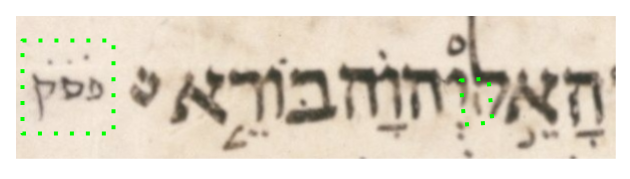
ג.2 מונח וקו מאונך הסמוכים לרביע הם תמיד מונח לגרמיה, ואף פָּסֵק הראוי לבוא מיד לפני רביע מתחלף בלגרמיה; חוץ ממקום אחד בלבד בכל המקרא. המקום היחיד הוא ישעיהו מב,ה ("הָאֵ֣ל ׀ יְהֹוָ֗ה"). העדות המפורשת של המסורה קובעת: "ולעולם לא תמצא פסק לפני רביע כי אם במקום אחד, והוא כֹּה־אָמַ֞ר הָאֵ֣ל ׀ יְהֹוָ֗ה בּוֹרֵ֤א [הַ]שָּׁמַ֙יִם֙" (משפטי הטעמים ז' ע״ב). הַפָּסֵק בַּפָּסוּק בישעיהו מודגש במסורה במקומות נוספים,[B+7] ובפסוקים האחרים שיש בהם מונח וקו מאונך הסמוכים לרביע יש ציונים של "לגרמיה".[B+8]
ג.2 Munaḥ and a
vertical line adjacent to revia are always
munaḥ legarmeh, and even a paseq that
would be expected immediately before revia is replaced by
legarmeh; except in one place only in the entire Bible. The sole
exception is
הָאֵ֣ל ׀ יְהֹוָ֗ה
in Isaiah 42:5. The explicit testimony of the Masorah states:
You will never find paseq before revia except in one place, which is:
כֹּה־אָמַ֞ר הָאֵ֣ל ׀ יְהֹוָ֗ה בּוֹרֵ֤א [הַ]שָּׁמַ֙יִם֙
(Mishpetei HaTe'amim 7b). The paseq in this verse in Isaiah is emphasized in the Masorah in several places,[B+7] and in the other verses that have munaḥ and a vertical line adjacent to revia there are [often] [marginal] annotations of “לג[רמיה].”[B+8]
Sub-section ג: rule 3
ג.3 לעתים רחוקות בא מונח לגרמיה לפני טעמים מפסיקים אחרים (חוץ מרביע). כל המקומות האלה מפורשים בספרות המסורה:
ג.3 Rarely, munaḥ legarmeh comes before other disjunctive accents (besides revia). All such cases are specified in the Masorah literature:
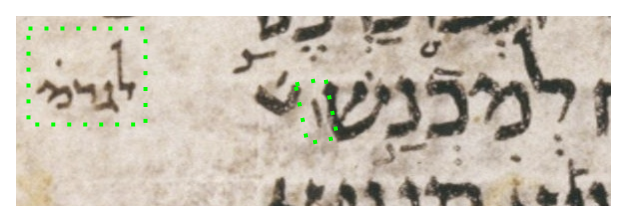
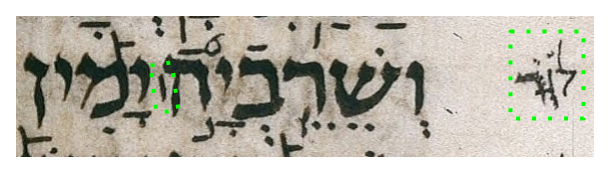
ג.3.1 מונח לגרמיה הסמוך לפזר (בתוך יחידה פשוטה בת שתי מילים). מדובר על שני מקומות בלבד המצוינים במסורה, אבל בשאר כל המקומות קו מאונך לפני פזר הוא פסק; קביעה זאת של המסורה מוזכרת פעמיים בספר משפטי הטעמים. הפזר מוזכר שם כטעם מפסיק שלגרמיה יכול לבוא לפניו (ל״ד ע״א): "הלגרמיה יתכן להיות אחריו רביע... ופזר, כגון: לְמִכְנַ֣שׁ ׀ לַֽאֲחַשְׁדַּרְפְּנַיָּ֡א (דניאל ג,ב, וראו הערת לגרמיה בכתי״ל); וְשֵׁרֵ֥בְיָ֣ה ׀ יָמִ֡ין (נחמיה ח,ז, וראו הערת לגרמיה בכתי״ל)." ועוד לפני כן כבר נזכר הפזר כטעם שלגרמיה יכול לבוא אחריו, וצויינו שם אותן שתי דוגמאות (ל״ג ע״א): "הפזר יתכן להיות אחריו התלישא... ויתכן אחריו לגרמיה: שְׁלַ֡ח לְמִכְנַ֣שׁ ׀ לַֽאֲחַשְׁדַּרְפְּנַיָּ֡א (דניאל ג,ב); וְיֵשׁ֡וּעַ וּבָנִ֡י וְשֵׁרֵ֥בְיָ֣ה ׀ יָמִ֡ין (נחמיה ח,ז)."
ג.3.1 Munaḥ
legarmeh adjacent to pazer (in a
simple two-word unit). This occurs in only two places noted in the Masorah, but in all other
places a vertical line before pazer is
paseq; this ruling of the Masorah is mentioned twice in Mishpetei
HaTe'amim. Pazer is mentioned there as a disjunctive accent that
legarmeh can precede (34a):
“legarmeh can follow
revia... and pazer,
e.g.:
לְמִכְנַ֣שׁ ׀ לַֽאֲחַשְׁדַּרְפְּנַיָּ֡א
[(Dan. 3:2, see legarmeh annotation in the
Leningrad Codex)];
וְשֵׁרֵ֥בְיָ֣ה ׀ יָמִ֡ין
[(Neh. 8:7, see legarmeh annotation in the
Leningrad Codex)].” And earlier, pazer is mentioned as an
accent that legarmeh can follow, with the same two examples (33a):
“pazer can follow
telisha... and
legarmeh can follow it:
שְׁלַ֡ח לְמִכְנַ֣שׁ ׀ לַֽאֲחַשְׁדַּרְפְּנַיָּ֡א
(Dan. 3:2);
וְיֵשׁ֡וּעַ וּבָנִ֡י וְשֵׁרֵ֥בְיָ֣ה ׀ יָמִ֡ין
(Neh. 8:7).”
ג.3.2 מונח לגרמיה בתחום שלטונו של גרש (11 מקומות): “הלגרמיה יתכן להיות אחריו רביע... וטרס (=גרש) לא יהיה (אחר לגרמיה) אלא אזיל ואתי (=קדמא ואזלא), והוא בי״א מקומות במקרא, והם...” (משפטי הטעמים ל״ד ע״א-ע״ב). הפריטים ברשימה של המסורה: בראשית כח,ט; שמ״א יד,ג; שמ״א יד,מז; שמ״ב יג,לב; מל״ב יח,יז; ירמיהו ד,יט; ירמיהו לח,יא; ירמיהו מ,יא; יחזקאל ט,ב; חגי ב,יב; דה״ב כו,טו.[B+9]
ג.3.2 Munaḥ legarmeh in the domain of geresh (11 places): “legarmeh can follow revia... and geresh shall not occur (after legarmeh) except as qadma and azla, and it occurs in 11 places in the Bible...” (Mishpetei HaTe'amim 34a–b). The items in the Masorah's list: Gen. 28:9; 1 Sam. 14:3; 1 Sam. 14:47; 2 Sam. 13:32; 2 Kgs. 18:17; Jer. 4:19; Jer. 38:11; Jer. 40:11; Ezek. 9:2; Hag. 2:12; 2 Chr. 26:15.[B+9]
ג.3.3 מונח לגרמיה בתחום שלטונו של פשטא (3 מקומות): “הלגרמיה יתכן להיות אחריו רביע... ויתכן להיות אחר לגרמיה פשטא בג' מקומות, והם...” (משפטי הטעמים ל״ד ע״ב).[B+10] הפריטים ברשימה של המסורה: ויקרא י,ו; ויקרא כא,י; רות א,ב.
ג.3.3 Munaḥ legarmeh in the domain of pashta (3 places): “legarmeh can follow revia... and pashta can follow legarmeh in 3 places...” (Mishpetei HaTe'amim 34b).[B+10] The items in the Masorah's list: Lev. 10:6; Lev. 21:10; Ruth 1:2.
ג.3.4 מונח לגרמיה לפני תביר, שהוא תחליפו של גרש (משפטי הטעמים ל״ד ע״ב): "ויתכן אחריו תביר במקום אחד, והוא: וַיִּשְׁלַ֥ח מֶֽלֶךְ־אַשּׁ֣וּר ׀ אֶת־רַבְשָׁקֵ֨ה מִלָּכִ֧ישׁ יְרוּשָׁלַ֛͏ְמָה (ישעיהו לו,ב), ולא יהיה לו שכן אחד מן הטעמים חוץ ממה שנזכר."
ג.3.4 Munaḥ
legarmeh before tevir, which is a
substitute for geresh (Mishpetei HaTe'amim 34b): “and
tevir can follow it in one place, which is:
וַיִּשְׁלַ֥ח מֶֽלֶךְ־אַשּׁ֣וּר ׀ אֶת־רַבְשָׁקֵ֨ה מִלָּכִ֧ישׁ
יְרוּשָׁלַ֛͏ְמָה
(Isa. 36:2), and it shall have no other neighboring accent besides what has been mentioned.”
Sub-section ג: discussion of legarmeh adjacent to pazer
לגרמיה הסמוך לפזר (3.1) שונה באופן עקרוני משלושת הסוגים הבאים אחריו (3.2-4), כי אצלם כל המקרים בסוג הם לגרמיה, ואילו לגבי לגרמיה הסמוך לפזר רק בשני המקומות האלה מדובר על לגרמיה ובכל שאר המקומות הוא פסיק. אפילו בפסוק בנחמיה שבו יש לגרמיה לפני פזר, בהמשך יש פָּסֵק באותן נסיבות בדיוק (כלומר מונח לגרמיה הסמוך לפזר בתוך יחידה פשוטה בת שתי מילים, כדי להפריד בין שני פריטים בתוך רשימה של שמות): "וְיֵשׁ֡וּעַ וּבָנִ֡י וְשֵׁרֵ֥בְיָ֣ה ׀ יָמִ֡ין עַקּ֡וּב שַׁבְּתַ֣י ׀ הֽוֹדִיָּ֡ה" (הקו המאונך האחרון הוא פסק דווקא). וכבר תהה ברויאר: "הלגרמיה של וְשֵׁרֵ֥בְיָ֣ה ׀ יָמִ֡ין דומה לפסק של שַׁבְּתַ֣י ׀ הֽוֹדִיָּ֡ה שבאותו פסוק... אין אנחנו יודעים, על שום מה נשתנו שני השמות הסמוכים לפזר; שהאחד מוטעם בלגרמיה וחברו במונח לפני פסק."[B+11]
The legarmeh adjacent to
pazer (3.1) is fundamentally different from the three types that
follow it (3.2–4), because in those cases all instances are
legarmeh, whereas for legarmeh
adjacent to pazer only these two places are
legarmeh and in all other places it is
paseq. Even in the verse in Nehemiah that has
legarmeh before pazer, later in the
same verse there is paseq in exactly the same circumstances (i.e.
munaḥ legarmeh adjacent to pazer in a
simple two-word unit, separating two items in a list of names):
וְיֵשׁ֡וּעַ וּבָנִ֡י וְשֵׁרֵ֥בְיָ֣ה ׀ יָמִ֡ין עַקּ֡וּב
שַׁבְּתַ֣י ׀ הֽוֹדִיָּ֡ה
(the last vertical line is specifically paseq). Breuer already
wondered: “The legarmeh of
וְשֵׁרֵ֥בְיָ֣ה ׀ יָמִ֡ין
resembles the paseq of
שַׁבְּתַ֣י ׀ הֽוֹדִיָּ֡ה
in the same verse... We do not know why the two names adjacent to
pazer differ; one is accented with
legarmeh and the other with munaḥ
before paseq.”[B+11]
למרות התמיהה יש סימן מובהק שב"וְשֵׁרֵ֥בְיָ֣ה ׀ יָמִ֡ין" מדובר על מונח לגרמיה, והוא טעם המרכא בתיבה "וְשֵׁרֵ֥בְיָ֣ה ׀"; מרכא הוא משרתו של לגרמיה דווקא (ולא משרתו של המונח). אפילו אהרן דותן, שדחה לחלוטין את האפשרות שלגרמיה יבוא בתחום פזר באף מקום, ועל עדות המסורה לשני המקומות כתב "ודאי שיבוש הוא",[B+12] נימק את עמדתו כך: "ואף ממשרתיו של מונח לגרמיה מוכרע הדבר. בידוע שמשרתו מירכא, אך לפני מונח ופסק שאינם לגרמיה לא יימצא מירכא לעולם."[B+13] אך הקו תחת האות רי״ש בתיבה "וְשֵׁרֵ֥בְיָ֣ה ׀" נוטה במקצת לצד שמאל בכתי״ל ובכתי״ש1, כדין מרכא, וכך הכריע דותן בעצמו במהדורות של המקרא שהוציא לאור.[B+14]
Despite this puzzlement, there is a clear sign that
in
וְשֵׁרֵ֥בְיָ֣ה ׀ יָמִ֡ין
it is munaḥ legarmeh: the merkha
accent on the word
וְשֵׁרֵ֥בְיָ֣ה ׀; merkha is specifically the
conjunctive of legarmeh (not the conjunctive of
munaḥ). Even Aron Dotan, who completely rejected the possibility that
legarmeh could occur in the domain of
pazer at all, and wrote of the Masorah's testimony for these two
places “it is certainly an error,”[B+12] reasoned as follows:
The matter is also decided from the conjunctive accents of munaḥ legarmeh. It is known that its conjunctive is merkha, but before a munaḥ and paseq that are not legarmeh, merkha will never be found.[B+13]
However, the line under the letter resh in the word
וְשֵׁרֵ֥בְיָ֣ה ׀
leans slightly to the left in the Leningrad Codex and the Sassoon 1053 manuscript, as befits
merkha, and this is how Dotan himself decided in the editions of the
Bible he published.[B+14]
לגבי הפסוק בדניאל שבו יש לגרמיה לפני פזר, ברויאר הראה שעל פי הפסוקים המקבילים שיש בהם טעם מפסיק (דניאל ג,ג "מִֽתְכַּנְּשִׁ֡ין אֲחַשְׁדַּרְפְּנַיָּ֡א"; ג,כז "וּ֠מִֽתְכַּנְּשִׁ֠ין אֲחַשְׁדַּרְפְּנַיָּ֞א"), הלגרמיה רומז לפזר שהיה ראוי לבוא במקום המונח.[B+15] בנוסף, יש לזכור שבשני הפסוקים יש ציון מפורש של "לגרמיה" בכתי״ל, ושניהם נעדרים מרשימת הפסק שבו.
Regarding the verse in Daniel that has
legarmeh before pazer, Breuer showed
that based on the parallel verses with a disjunctive accent (Dan. 3:3
מִֽתְכַּנְּשִׁ֡ין אֲחַשְׁדַּרְפְּנַיָּ֡א
; 3:27
וּ֠מִֽתְכַּנְּשִׁ֠ין אֲחַשְׁדַּרְפְּנַיָּ֞א
), the legarmeh hints at a pazer that
should have come instead of the munaḥ.[B+15]
Additionally, in both verses there is an explicit legarmeh annotation
in the Leningrad Codex, and both are absent from the paseq list
therein.
Sub-section ג: historical perspective and scholarly discussion
ייתכן שבמקור לא היה הבדל מובהק בין לגרמיה ופסק, שהרי שניהם באים להורות על הפסקה כלשהי ויש סימן אחד לשניהם (הקו המאונך). היידנהיים כבר הציע שלגרמיה נחשב סוג של פסק בעיני חכמי המסורה (משפטי הטעמים ל״א ע״ב): "בעבור שהלגרמיה הוא המפסיק בין המונח והטעם שאחריו, לכן לא נמנע החכם להכניסו בביאור הפסק." דותן דחה את דעתו, אך בכל זאת הציע דבר דומה. על הדברים ב"ביאור הפסק", המציעים מטרה משותפת לדוגמאות של לגרמיה ופסק כאחד, דהיינו "להפריד בין הטעמים שיהיו מופרדים איש מאחיו ולא נצמדים", כתב:
It is possible that originally there was no clear distinction between legarmeh and paseq, since both serve to indicate some kind of pause and share the same sign (the vertical line). Heidenheim already suggested that legarmeh was considered a type of paseq in the eyes of the Masorah scholars (Mishpetei HaTe'amim 31b): “Since legarmeh is what separates the munaḥ from the accent that follows it, the sage did not refrain from including it in the explanation of paseq.” Dotan rejected this view, yet proposed something similar. Regarding the statements in the “explanation of paseq,” which suggest a shared purpose for examples of legarmeh and paseq alike, namely “to separate the accents so that they are distinct from one another and not attached,” he wrote:
אכן זהו תפקידו של הפָסק בין שהוא בא אחרי מונח בתחום הרביע והופך אותו לטעם מפסיק – מונח לגרמיה, ובין שהוא בא אחרי מונח בתחום פזר וגורם להפסקה שכוחה ככוח טעם מפסיק; וממונח בתחום פזר רשאים אנו ללמוד גזרה שווה אף על פסק שאחרי כל משרת אחר ובכל תחום...
Indeed, this is the function of paseq: whether it comes after munaḥ in the domain of revia, transforming it into a disjunctive accent — munaḥ legarmeh, or whether it comes after munaḥ in the domain of pazer, causing a pause with the force of a disjunctive accent; and from the munaḥ in the domain of pazer we may infer by analogy to paseq after every other conjunctive accent in every domain...
בכל זאת יש מקום לפשפש בניצניה של תפיסה זו, שאי אפשר היה לה שתצמח על קרקעה של מערכת המושגים המקובלת (שהיא גם היחידה הידועה לנו), שבה מונח לגרמיה ופסק הם עניינים רחוקים זה מזה תכלית ריחוק – פסק אינו שייך כלל למערכת הטעמים – ודבר אין להם זה עם זה מלבד שיתוף הסימן. וסימן הפָסק לבדו בוודאי אינו סימן טעם, סימן מוסיקאלי, אלא סימן פיסוק בלבד. עצם העובדה, ששניהם נכרכו כאן ביחד, ושמונח לגרמיה הוכלל בקטגוריה של פסק, מניחה מקום לסברה שלכתחילה לא היה הבדל מהותי בין השניים, ושלא תמיד היה מונח לגרמיה נחשב טעם עצמאי במערכת הטעמים. רישומיה של אותה תקופת בראשית בהתהוות מערכת הטעמים עדיין ניכרים ...
Yet there is room to investigate the origins of this view, which could not have grown on the ground of the accepted conceptual system (which is also the only one known to us), in which munaḥ legarmeh and paseq are matters far removed from each other — paseq does not belong at all to the accentuation system — and they have nothing to do with each other besides sharing a sign. The sign of paseq alone is certainly not an accentual sign, a musical sign, but merely a punctuation mark. The very fact that both were grouped together here, and that munaḥ legarmeh was included in the category of paseq, leaves room for the conjecture that originally there was no essential difference between the two, and that munaḥ legarmeh was not always considered an independent accent in the accentuation system. Traces of that early period in the development of the accentuation system are still discernible ...
ברויאר הדגיש את הדמיון הרב בין פסק לבין לגרמיה הבא ביחידה פשוטה בת שתי תיבות:[B+16]
Breuer emphasized the great similarity between paseq and legarmeh occurring in a simple two-word unit:[B+16]
ברוב המקומות, שיש בהם לגרמיה סמוך לרביע, פזר או קדמא, הרי זה מסתבר, שהלגרמיה איננו אלא תחליף של משרת ופסק. ולפיכך בכל המקומות שלגרמיה סמוך בהם לרביע או לפזר, היה זה מתקבל על הדעת לומר, שאין זה לגרמיה כלל, אלא זהו מונח שלפני פסק; שהרי מונח משמש כמשרתם הרגיל של רביע ופזר. אולם המסורה תפסה את כל המונחים האלה כלגרמיה, ולפיכך לא מנתה אותם ברשימת הפסקים. וכן מסרו הקדמונים (משפה״ט ז, ע״ב): ולעולם לא תמצא פסק לפני רביע, כי אם במקום אחד במקרא והוא כֹּה־אָמַ֞ר הָאֵ֣ל ׀ ה֗' בּוֹרֵ֤א הַשָּׁמַ֙יִם֙ (יש' מב, ה). ומכאן, שכל התופעה שנידונה לעיל,[B+17] נשענת רק על עדות המסורה, ולא על נוסח הטעמים שבמקרא גופו.[B+18]
In most places where legarmeh is adjacent to revia, pazer, or qadma, it is plausible that legarmeh is nothing but a substitute for a conjunctive accent and paseq. Therefore, in all the places where legarmeh is adjacent to revia or pazer, it would have been reasonable to say that it is not legarmeh at all, but rather a munaḥ before paseq; since munaḥ serves as the regular conjunctive of revia and pazer. However, the Masorah treated all these munaḥ accents as legarmeh, and therefore did not count them in the paseq lists. As the ancients transmitted (Mishpetei HaTe'amim 7b): “You will never find paseq before revia, except in one place in the Bible, which is:
כֹּה־אָמַ֞ר הָאֵ֣ל ׀ ה֗' בּוֹרֵ֤א הַשָּׁמַ֙יִם֙
(Isa. 42:5).” Hence, the entire phenomenon discussed above[B+17] rests solely on the testimony of the Masorah, not on the accent text of the Bible itself.[B+18]
יוצא לנו שהמסורה מעידה במפורש על לגרמיה בפסוקים רבים שנראה שיש בהם פסק. אבל ייתכן שמלכתחילה לא היה הבדל מהותי ביניהם, ולמעשה הרבה מקרים של לגרמיה הם בעצם תחליף של משרת ופסק.
We thus find that the Masorah explicitly testifies to legarmeh in many verses that appear to have paseq. But it is possible that originally there was no essential difference between them, and in practice many cases of legarmeh are in fact a substitute for a conjunctive accent and paseq.
Sub-section ד: typographic marking
ד. דרך הסימון של "פָּסֵק" ושל "לְגַרְמֵיהּ" במהדורתנו: יש רק תו אחד ביוניקוד בשביל "פָּסֵק" ובשביל "לְגַרְמֵיהּ" כאחד, למרות שמשמעותם שונה. אבל בגלל המנהג המקובל (בכל הדפוסים והמהדורות) לסמן את הקו המאונך רק לאחר רווח בסוף התיבה, ניתן בקלות ובלי סרבול מיותר לעשות הבחנה בעיצובם על ידי השימוש באחת משתי תבניות שונות בסוף כל תיבה מתאימה:
ד. The method of marking paseq and legarmeh in our edition: Unicode has only one character for both paseq and legarmeh, despite their different meanings. However, because the accepted convention (in all printed editions) is to mark the vertical line only after a space at the end of a word, it is possible — easily and without unnecessary complication — to visually distinguish them by using one of two different templates at the end of each relevant word:
תבנית לגרמיה: תבנית זו יוצרת קו מודגש של "לגרמיה" לאחר רווח מיוחד קצר,[B+19] ולאחר הקו רווח רגיל. קו הלגרמיה מהווה חלק מטעם מפסיק של תיבה, ואינו קשור לתיבה הבאה. הוא בא לציין שאין כאן מונח רגיל (טעם מחבר) אלא מונח שהוא טעם מפסיק ("לגרמיה").
Legarmeh template: This template creates a bold legarmeh line after a short special space (thin space),[B+19] followed by a regular space. The legarmeh line is part of a disjunctive accent of a word and is not related to the following word. It indicates that here there is not a regular munaḥ (conjunctive accent) but rather a munaḥ that is a disjunctive accent (munaḥ legarmeh).
תבנית פסק: תבנית זו יוצרת קו מוקטן של פסק בצבע אפור בתוך שני רווחים מיוחדים וקצרים לפניו ולאחריו. קו פסק בא להבחין הבחנה קלה בלבד בין שתי תיבות המחוברות בטעם מחבר כדי להזכיר לקורא להבחין ביניהם, ואינו אמור להפריע לרצף של הטעמים בקריאה. הפסק כשלעצמו אינו טעם, והוא בא בדרך כלל בין שתי תיבות דומות או מסיבות אחרות.
Paseq template: This template creates a smaller paseq line in gray between two short special spaces (thin spaces) before and after it. A paseq line serves to make only a slight distinction between two words connected by a conjunctive accent, to remind the reader to distinguish between them, and it is not meant to interrupt the flow of the accents in reading. Paseq itself is not an accent, and it usually comes between two similar words or for other reasons.
Sub-section ה: paseq and legarmeh in Emet books
ה. פסק ולגרמיה בספרי אמ״ת: בספרי אמ״ת יש שני טעמים של לגרמיה: "אָזְלָא לְגַרְמֵיהּ" ו"מַהְפָּךְ לְגַרְמֵיהּ".[B+20] הקו המאונך הבא אחרי הטעמים אזלא ומהפך כדי לציין לגרמיה, הוא לעתים תחליפו של משרת שיש לאחריו פסק, ויש בו דמיון ללגרמיה בכ״א הספרים הבא בסמיכות לרביע.[B+21]
ה. Paseq and legarmeh in the poetic books: In the poetic books there are two legarmeh accents: azla legarmeh and mahapakh legarmeh.[B+20] The vertical line that comes after azla and mahapakh to indicate legarmeh is sometimes a substitute for a conjunctive accent followed by paseq, and it resembles legarmeh in the 21 books occurring adjacent to revia.[B+21]
ההבחנה בין "פסק" ו"לגרמיה" בספרי אמ״ת נבדקה מול רשימת הלגרמיה של גינצבורג[B+22] ובעיקר מול רשימת הפסק שלו, המבוססת לא רק על הערות בכתבי־יד אלא גם על רשימות מסורה מובהקות.[B+23] אך יש מספר פריטים של מהפך לגרמיה ואזלא לגרמיה הנמצאים ברשימת הפסק שלו, ואותם סימנו כלגרמיה; רובם נמצאים גם כן ברשימת הלגרמיה.[B+24] ובמקומות אחרים יש קו מאונך של פסק בכתר ארם צובה שאינו מובא ברשימת הפסק, רובם אחרי התיבה "לַמְנַצֵּ֬חַ ׀" בכותרות של מזמורים.[B+25]
The distinction between
paseq and legarmeh in the poetic books
was checked against Ginsburg's legarmeh
list[B+22] and especially against his paseq
list, which is based not only on annotations in manuscripts but also on authoritative Masorah
lists.[B+23] However, there are several mahapakh
legarmeh and azla
legarmeh items found in his paseq
list, which we marked as legarmeh; most of them are also found in the
legarmeh list.[B+24] In other places there is a
paseq vertical line in the Aleppo Codex that is not listed in the
paseq list, most of them after the word
לַמְנַצֵּ֬חַ ׀
in psalm headings.[B+25]
Sub-section ו: vertical line after shalshelet
ו. הקו המאונך אחרי שלשלת: גם את הקו המאונך של הטעם המפסיק "שלשלת" (בכ״א הספרים) ומקבילו "שלשלת גדולה" (בספרי אמ״ת) עיצבנו בעיצוב של לגרמיה. על הקו הזה כתב ברויאר: "אחרי תיבת שלשלת יש תמיד קו דמוי פָּסֵק, כגון: וַיֹּאמַ֓ר ׀ (בר' כד, יב). קו זה בא להבדיל בין שלשלת גדולה המפסיק לבין שלשלת קטנה המשרת. שני הטעמים האלה מצויים באמ״ת, והם שוים בצורתם; משום כך היה צורך להבדיל ביניהם באמ״ת. משם הועבר הקו גם אל כ״א ספרים, אף על פי ששלשלת מצויה בהם רק כטעם מפסיק."[B+26]
ו. The vertical line after shalshelet: We also styled the vertical line of the disjunctive accent “shalshelet” (in the 21 books) and its counterpart “shalshelet gedolah” (in the poetic books) in the legarmeh style. About this line, Breuer wrote:
After a shalshelet word there is always a paseq-like line, e.g.:
וַיֹּאמַ֓ר ׀
(Gen. 24:12). This line serves to distinguish between the disjunctive shalshelet gedolah and the conjunctive shalshelet qetanah. Both of these accents are found in the poetic books, and they are identical in form; therefore it was necessary to distinguish between them in the poetic books. From there, the line was transferred also to the 21 books, even though shalshelet is found in them only as a disjunctive accent.[B+26]