
In recent decades, a common way to make a Hebrew Bible (or some subset of it) has been to take some version of WLC and edit, at great expense, from there. I know that some books used this process because they describe it in their Foreword or other front matter. For other books, I have inferred this from places where signs of WLC have “leaked through” their editing process.
Few book projects can afford the Hebrew editing of this process. Though many parts of publishing have become less expensive, I suspect that Hebrew editing remains as costly as ever. That would make Hebrew editing more expensive, relative to the overall budget, than ever before.
Many projects cannot afford this and have instead resorted to using WLC directly (verbatim).
One such project was A Hebrew Reader for the Pentateuch, by Kline and Lavery. I will use it as an example of the problems of “verbatim WLC” books. Its problems are no worse than those of any other “verbatim WLC” book.[1] Nonetheless this Reader is a useful example because it is so recent (2024) and because it is so short.
Its recency shows the continued popularity of the “verbatim WLC” approach even though something better has been around since 2013: MAM (Miqra According to the Masorah). Though MAM has existed for more than a decade, it is little-known in the Jewish publishing world, and almost unknown in the Christian publishing world.[2]
Kline and Lavery’s Reader is a useful example not only for its recency but also for its brevity. It contains only 666 numbered verses.[3] Its brevity allows every anomaly inherited from WLC to be listed. This list gives a sense of just how dense these anomalies are, if there are so many even in such a short book.[4]
WLC began as a digital version of the body text of BHS. Over the years, it diverged from BHS in places where the WLC editors found BHS lacking. But WLC remains, like BHS, a diplomatic edition of the LC. Therefore it remains inappropriate for most uses it is put to, including its use in this Reader.
The anomalous pointings that one finds in WLC are relevant only to students of the LC itself. They are irrelevant to almost all students of Biblical Hebrew. When confronted with an anomaly, beginners will probably not know enough to be confused, but the intermediate student will likely be “rewarded” with confusion. This is the basic problem with verbatim use of a diplomatic text like WLC.
It is disappointing to see this mistake perpetuated by Hendrickson since its 2001 BHL (Biblia Hebraica Leningradensia) (Dotan) struck a rare balance between the needs of a diplomatic edition and a general-purpose edition. It did so by embedding, implicitly, a diplomatic edition inside a general-purpose edition. The main text is a general-purpose edition that is unobtrusively yet clearly annotated with pointers to the diplomatic edition implied by its Appendix A.
The use of WLC in this Reader contrasts not only with BHL but also with the careful, AC-centered approach taken in another Hendrickson book involving Kline: A Hebrew Reader for the Psalms (2021), with Peter Myers. Obviously an AC-centered approach is not an option for a Pentateuch reader. My point is that the Psalms Reader team invested great effort in the Hebrew text rather than just using WLC. No electronic text is better known or less expensive ($0) than WLC, but it is also a contender for being the least appropriate for a reader (or even for general-purpose use).[5]
An arguably more serious problem with diplomatic editions is not the anomalies they reproduce but the aids they lack. The aids expected in a reader’s edition depend on whether the target audience is Jewish or Christian. Roughly speaking, one expects to find pronunciation aids in a Jewish reader’s edition and one expects to find translation aids in a Christian reader’s edition. But I see no reason why Christian readers would not want both types of aids. The pronunciation aids that this Reader lacks, at least some of which are present in all Jewish reader’s editions, are the following:
A fifth type of aid present in many Jewish reader’s editions and present in this Reader is the separation of the תחתון cantillation from the עליון cantillation in the Decalogues. This is not exactly a pronunciation aid; it is more of a chanting aid.[6] This Reader, though presumably not chanting-oriented, has taken pains to reflect, in its use of whitespace, the prosodic guidance provided by the stronger disjunctive accents. So it is not entirely surprising that, laudably, the Reader does (attempt to) provide the aid of separation of תחתון from עליון. Few verbatim-WLC editions attempt this.[7]
The Reader takes an approach to separation I have not seen before. While it uses the classic unfriendly approach where תחתון and עליון marks appear on a single set of letters, it uses gray for the marks it deems exclusive to the עליון, leaving in black the marks it deems either exclusive to the תחתון or shared by both cantillations.[8] While this approach still leaves some ambiguity (between תחתון and shared), if it had been carried out with more care it would have been a big help.
On the topic of gray: the halftoning in the Reader does not, in my opinion, achieve a convincing emulation of true gray, but it is good enough. I do not know whether its limitations are simply due to the resolution of the printing process, or whether the halftoning could have used the given resolution better. An increase in resolution or a switch to a genuine two-color printing process would likely be beyond the budget for this project.
Having described, in general terms, what I perceive to be the WLC-inherited deficiencies of the Reader, I will now catalog some specific examples.
In Gn 1:11 דשא, the Reader has זקף rather than רביע.
There is some printed and manuscript precedent for זקף. But, רביע is generally agreed to be not only the Masoretic consensus but also the most likely contents of the LC there. See UXLC change 2021.02.22-1 and MAM with doc. Even BHQ Genesis (2016) has been updated to have רביע rather than זקף, though oddly it still has זקף in its apparatus.
In Gn 2:8 גן־בעדן, the Reader has ב without דגש. (page 12)
The LC’s ב is most likely free of דגש (contra UXLC change 2021.02.22-2). But whether the LC has a דגש here or not is irrelevant; what is relevant is that the consensus is that there should be a דגש here. MAM with doc discusses the question of this דגש as well as other issues with this word.
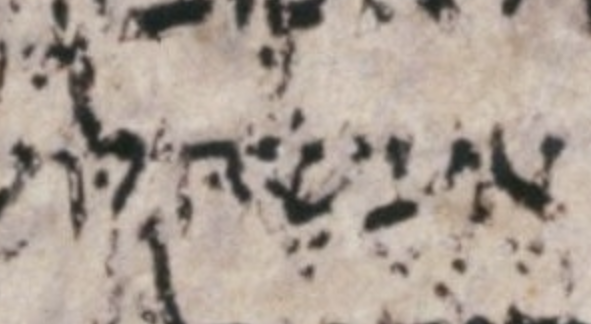
In Gn 2:18 אעשה־לו, the Reader has a דגש in the ה. (page 14)
The LC is in bad shape here. This is one of its many sections that were re-inked by a later hand. Nonetheless, the דגש in question is pretty clear (page 2A, column 3, line 5 from the bottom):
Yet, it is also clear that this דגש is just an anomaly of the LC (perhaps only present in the re-inked hand), and thus is inappropriate for a reader’s edition. See the discussion in MAM with doc. (Here and elsewhere, by “anomaly” we mean either an accidental error or an intentional but nonstandard pointing. For our purposes, it does not matter which of those two is the source of the anomaly.)
In Gn 7:19 גברו, the Reader has געיה rather than מרכא (on ג). (page 33)
The distinction of געיה from מרכא is a vexing problem, particularly in the LC. Yet, in this case it is reasonable to apply Dotan’s policy to resolve the problem:
Since there is usually no unequivocal distinction in the manuscript between a merkha and a gaʿya, both being a perpendicular, straight line underneath the word, we treated this straight line as a merkha not only in the accented syllable, but also in a word with tevir with no preceding conjunctive accent, when only a mobile shewa separates the line from the accent. (Foreword to BHL, page xv)
UXLC change 2022.07.02-2 acknowledges this מרכא-געיה uncertainty with an m-note, though, unlike Dotan, it considers געיה to be the most likely (or at least the most literal) reading of the LC. As usual, MAM with doc discusses the issue.
In Gn 7:23 וישאר, the Reader has י without דגש. (page 34)
This lack of דגש is just an anomaly of the LC, and thus is inappropriate for a reader’s edition. See the discussion in MAM with doc.
In Gn 15:10 הצפר, the Reader has צ without דגש. (page 52)
Though the Sassoon 1053 manuscript possibly supports it, this lack of דגש is likely just an anomaly of the LC, and thus is inappropriate for a reader’s edition. See the discussion in MAM with doc.
In Gn 18:15 ויאמר לא, the Reader has no געיה (on מ). (page 64)
While there is no consensus on this question, an argument can be made (and is made in MAM with doc) that מ should have a געיה in any general-purpose Hebrew Bible. There is even an argument that the LC has the remnants of such a געיה. UXLC change 2024.09.29-1 interprets these remnants as a מרכא, albeit with a t-note indicating some uncertainty as to its existence. While a מרכא may be the most literal reading of these remnants, I find געיה rather than מרכא to be the most likely reading of these remnants. See section 325 of Israel Yeivin’s Introduction to the Tiberian Masorah, available in a rather freely-adapted version here.
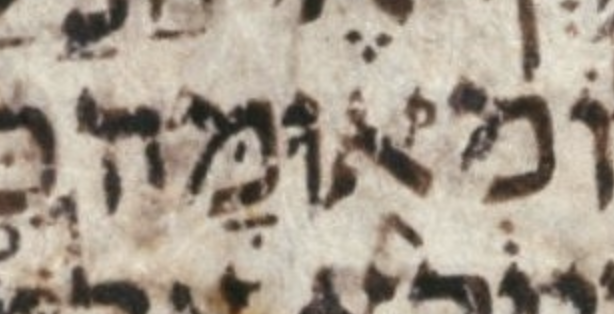
In Gn 22:12 מאומה, the Reader has a דגש in the second מ. (page 68)
The LC pretty clearly has a דגש in the מ in question. But that anomaly is irrelevant to a reader’s edition, which should not have such a דגש. See MAM with doc. Again, it is irrelevant, but for the curious, here’s an image of the LC (page 12A, column 2, line 3 from the bottom):
In Gn 32:24 את־אשר־לו, the Reader lacks a סילוק. (page 80)
The סילוק is expected on ל. This is likely an accidental error in the LC, not an intentional but nonstandard (lack of) pointing. Those wishing to speculate to the contrary have many diplomatic versions of the LC to work from, as well as the blessing of Internet-available color photos, something previous generations of scholars could only dream of. (And even such dreams would have required an almost prophetic imagination.) In short, there is no reason to pollute a reader’s edition with such an anomaly. See MAM with doc. A סילוק is similarly missing in the Reader in Ex 32:17. See below.
In Gn 45:6 וקציר, the Reader has a דגש in the צ. (page 89)
The LC pretty clearly has a דגש on the צ in question (page 28A, column 2, 3 lines up from the bottom):
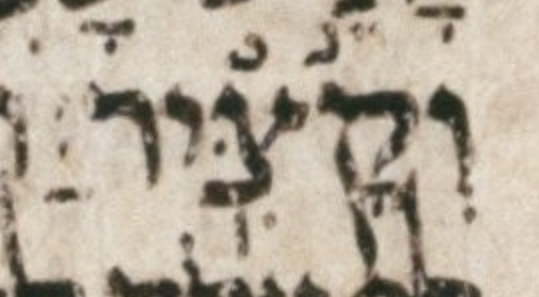
But, as usual, whether the דגש is clear or not is irrelevant. It is anomalous. See MAM with doc.
In Ex 14:13 התיצבו, the Reader has צ without דגש. (page 111)
This reflects an anomaly in the LC. See MAM with doc.
In Ex 20:2, the Reader fully reverses תחתון and עליון.
These errors (and some others like them I will describe separately) do not directly stem from WLC since it makes no distinction between תחתון and עליון. They stem indirectly from WLC in the sense that because it provides no help, the editors of the Reader had to “go it alone,” an error-prone enterprise. I will merely list the four words involved, without getting into the details: אנכי … אלהיך … מבית עבדים. Not only the סילוק of עבדים but also its סוף פסוק should be gray. I.e. the span of words between the ב and ג verse numerals in the Reader should be notated as a complete chanted verse only in the עליון. In the תחתון, this span of words is merely a half-verse, i.e. reaches merely up to the אתנח.
A similar full reversal of the cantillations happens in 20:13–15.
I found no documentation in the Reader of what gray is supposed to mean, and have simply inferred that it is supposed to mark the עליון. In an alternate interpretation, where gray marks the תחתון rather than the עליון, these four verses (20:2, 13–15) would be correct, and all other verses having dual cantillation would be wrong.
In Ex 20, the Reader has multiple anomalous accent orderings.
In the Exodus Decalogue, when there are two below-accents or two above-accents on a letter, the LC often frustrates expectations of תחתון-then-עליון ordering. While the Reader’s use of gray makes these anomalies mostly harmless, I still see no reason to reproduce them in a reader’s edition. One early example is the LC’s פזר-then-זקף ordering on תמונה in 20:4.[9] This is עליון-then-תחתון ordering, i.e. the anomalous ordering, which shows up in the Reader as gray-then-black ordering. I will not list other examples. There are several.
In Ex 20:3 לא יהיה לך, the Reader’s תחתון and עליון are anomalous. (page 134)
(This is in 20:2 in some editions.) In its representation of the two cantillations of the three “atoms” לא, יהיה, and לך, the Reader lacks two marks and colors two marks wrong.
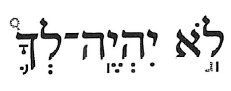
The full, consensus cantillations are as follows.
| לֹ֣א יִהְיֶֽה־לְךָ֩ | (עליון) |
| לֹֽא־יִהְיֶ֥ה לְךָ֛ | (תחתון) |
The Reader lacks the following two marks, presumably because they are absent from the WLC (and absent from the LC itself):
The following two marks are exclusive to the עליון and therefore, according to the Reader’s scheme, should have been colored gray (as the מונח and תלישא were) rather than black:
In Ex 20:3 פני, the Reader’s פתח appears to belong to the י.
(This is in 20:2 in some editions.) This is a mistake in BHS inherited by WLC, not an anomaly in the LC itself. See UXLC change 2021.05.19-8. Typographically, this is a challenging word, but something should be done to suggest that the פתח belongs to the נ.
In Ex 20:4 לא תעשה לך, the Reader’s תחתון and עליון are anomalous. (page 135)
(This is 20:3 in some editions.) In its representation of the two cantillations of the three “atoms” לא, תעשה, and לך, the Reader lacks one mark, colors two marks wrong, and, arguably, misplaces one mark.
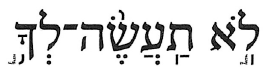
The full, consensus cantillations are as follows.
| לֹ֣א תַעֲשֶֽׂה־לְךָ֣ | (עליון) |
| לֹֽא־תַעֲשֶׂ֨ה לְךָ֥ | (תחתון) |
As above in לא יהיה לך, here in לא תעשה לך the Reader lacks the מקף after לא in the תחתון, reproducing an anomaly (or at least, a regrettably implicit notation) in the LC (via WLC).
Also as above, the Reader should have used gray for two marks on תעשה: the מקף after it and its געיה, wherever that געיה is located (see below).
The Reader, like several estimable (but in my opinion mistaken) modern printed editions, reproduces an anomalous location for the געיה on תעשה in the עליון, namely, on the ת. The consensus formed from consulting other manuscripts is that this געיה should be on the ש, the letter where, not coincidentally, the qadma is in the תחתון. The LC’s own Deuteronomy Decalogue supports this consensus as well. See MAM with doc.
In Ex 20:4 בארץ מתחת, the Reader’s פתח (on ת) should be gray.
(This is 20:3 in some editions.) The פתח here should be colored gray, as it is, correctly, in Ex 20:3 פני. (There the פתח belongs to the wrong letter but has the right color (gray).)
In Ex 20:4 ואשר במים, the Reader has מונח in the עליון.
(This is 20:3 in some editions.) Arguably, the consensus is that both תחתון and עליון have מרכא. See MAM with doc.
In Ex 20:5 לא־תשתחוה, the Reader has a simple שווא on ח. (page 135)
(This is 20:4 in some editions.) The consensus pointing is חטף פתח on ח. See MAM with doc.
In Ex 20:10 אתה ובנך ובתך, the Reader’s לגרמיה is ambiguous.
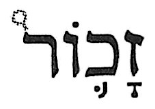
(This is 20:9 in some editions.) Mostly, the Reader gets away with using black for both תחתון and shared symbols. It gets away with it because most black symbols that are exclusive to the תחתון have a gray symbol that the astute reader can identify as excluding that black symbol from the עליון. In such cases, it is clear to the astute reader that we are dealing with an “either/or” situation. For instance even in 20:8 זכור,[10] though the accents are not vying for the same letter, the astute reader can identify that the gray תלישא excludes the black תביר from the עליון:
But it takes a real expert, not just an astute reader, to identify that, though the מונח on אתה is shared, the תלישא in ובנך excludes the לגרמיה from the עליון in the following:

I.e. the תחתון has מונח לגרמיה whereas the עליון merely has מונח. As far as I can see, the Reader has no way to notate that within its scheme of gray and black.
In Ex 20:13–15, the Reader fully reverses תחתון and עליון.
(This is all in 20:12 in some editions.) These are the distinctively-short verses of the עליון, that should each be cantillated with טפחא and סילוק. A similar full reversal of the cantillations happens in 20:2. The דגש marks inside of each of the following words should have been gray since they belong only to the עליון: verse 13 תרצח, verse 14 תנאף, and verse 15 תגנב. It is unclear whether, pragmatically, a mark as tiny as a דגש can be recognized to be gray, particularly with the not-very-convincing halftoning of this volume. It is possible that the use of a רפה bar in black above each of these letters might help, indicating a רפה exclusive to the תחתון.
In Ex 32:17 במחנה, the Reader lacks a סילוק. (page 150)
The סילוק is expected on נ. As in Gn 32:24, this is likely an accidental error in the LC, and thus unlikely to be even of scholarly interest. But, as usual, the source of the anomaly is irrelevant: even anomalies of scholarly interest have no place in a reader’s edition. Unlike the Gn 32:24 case, there is a געיה on the word, which makes the lack of סילוק more dangerous, since the געיה could be taken to be a סילוק by an inexperienced reader. See MAM with doc.
In Ex 33:16 ונפלינו, the Reader has צירה on ל. (page 157)
The consensus pointing is חיריק. See MAM with doc.
In Nm 12:9 ויחר אף, the Reader lacks a מקף. (page 178)
This leaves ויחר with no accent, only a געיה, which, as one might imagine, is not the consensus pointing of this word. See MAM with doc. The Reader represents some but not all the LC anomalies in these words/this word. See the Appendix of this review.
The Reader should have used a base text like MAM, which reflects the Masoretic consensus or, in dubious cases, at least reflects its editors’ best, educated guess as to the Masoretic consensus. Instead, the Reader used WLC, which merely reflects the LC, or, in dubious cases, reflects its editors’ best, educated guess as to the contents of the LC.
The LC contains many anomalies that may confuse or mislead students. Beginners are likely to be misled; intermediate students may know enough to be confused. While the unexpected presence or absence of a דגש here and there does no great harm, there is no reason to accept these anomalies, and many other editions outside the “cult of BHS” do better, including MAM and Hendrickson’s own BHL and Psalms Reader. In rare cases, such as a missing סילוק on a word with a געיה,[11] the harm is greater than in the more typical דגש-related cases.
The Reader attempted to impose a “gray for עליון” reading aid upon the unfriendly WLC base text for the Exodus Decalogue. Though the attempt was laudable, its many serious errors made it, overall, a failure. The use of a base text like MAM, which supplies separated תחתון and עליון Decalogues, would have avoided such a failure.
Fortunately for Kline and Lavery, WLC, despite its occasional corrections to BHS, inherits some of the felicitous failures of BHS. BHS strives to be a diplomatic edition of the LC, but often fails to do so. When BHS accidentally reflects the Masoretic consensus instead of an anomaly in the LC, this makes the Reader accidentally more appropriate for general-purpose use, as long as WLC has not corrected the error in BHS. I found that this happened in the Reader in the following cases:
[1] E.g., Zondervan’s 2008 Reader.
[2] MAM’s obscurity is as much (or more) due to my failure to promote it as it is others’ failure to seek it out.
[3] Note that numbered verses do not necessarily correspond to chanted verses. E.g. the span of text labelled by a verse number may contain more than one or less than one chanted סוף פסוק. Also note that the number of chanted verses is not well defined in the Reader because it has a dually-cantillated passage (the Exodus Decalogue). Note that according to the list on pages xvi and xvii, the Reader has only 665 verses. This is because section 2.6, “Jacob’s Ladder,” Gen 28:10-22, is incorrectly identified as having only 12 verses. (It has 13.)
[4] This assumes that anomalies are evenly distributed across Tanakh; that is probably not true, but may be close enough to true to still make this a valid point.
[5] The Chabad-hosted CTR (Judaica Press) is the only electronic text I am aware of that would be a worse choice. See my review.
[6] Although cantillation separation is not primarily a pronunciation aid, many people are unaware that the cantillations cause דגש and vowel differences in some places. I.e., the differences between the cantillations are not limited to the accents and the marks most closely associated with the accents (געיה, מקף, פסק, לגרמיה, and סוף פסוק). But, the דגש and vowel differences in question will not result in different pronunciations for some Hebrew readers. The דגש differences are on the letter ת, which, for some readers, is pronounced the same whether or not it has a דגש קל. Similarly, the vowel differences are between קמץ גדול and פתח, which, for some readers, are pronounced the same. Note, though, that there are living readers who do make both of these distinctions in pronunciation. See Exodus 20 in the Ashkenazic version of my Phonetic MAM.
[7] Editions that do not separate the cantillations could be doing so by conscious (but in my opinion poor) editorial choice, or they could simply be unaware of the option to separate. For example, Zondervan’s Reader does not attempt separation, but it is hard to know whether this was a conscious choice or an accident. Timothy Lee’s The Book of Deuteronomy: A Hebrew Reader, another verbatim-WLC edition, attempts to present only the תחתון but does an incomplete job of it.
[8] This “עליון in gray” scheme is reversed in Exodus verses 20:2 and 13–15. There it is the תחתון that is in gray.
[9] In some editions this is 20:3 not 20:4.
[10] In some editions this is 20:7 not 20:8.
[11] Ex 32:17 במחנה.
[12] In some editions this is 20:7 not 20:8.
[13] In some editions this is 20:10 not 20:11.
[14] In some editions this is 20:9 not 20:10.

