| אַֽנֲשֵׁ֥י אַ֥נֲשֵׁ֥י |
34:10 | געיה not מרכא (on א) in μL, says BHQ but not WLC |
Note that consensus has a rare and hard-to-understand phenomenon called “secondary מרכא” by Breuer. It may seem rather extraordinary to have two מרכא marks on the same word, but this is actually expected (or at least “allowed”).
This is one of about a dozen analogous cases listed here.
See Breuer CoS sections 9.23, 9.24, and 11.20. (CoS = The Cantillation of Scripture.) (Note that an English translation of CoS is now available, a great boon to students of cantillation who cannot easily read the original in its modern Hebrew.)
In μY, the mark in question is absent: the א just has פתח. Also in μY, the נ has only a simple שווא rather than a חטף פתח, although presumably that is unrelated to μY’s lack of the mark in question, which is the main point here.
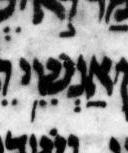
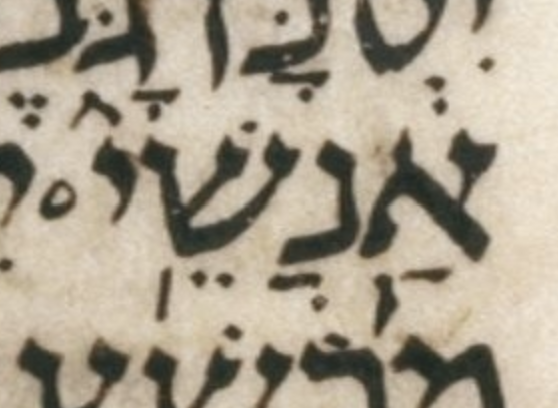
Two things about μL cannot go unmentioned. First, the mark in question is very oddly shaped for either a מרכא or a געיה. Second, the marks under the נ are charitably transcribed as forming a חטף פתח. In truth, there is evidence of only the lower of the two dots of the שווא-like part of a חטף פתח, and that dot is oddly placed, being mostly under the bar of the פתח-like part. Continuing in the charitable mood, we could “explain away” the odd placement of the lower dot and the absence of the upper dot by speculating that the missing dot disappeared into the פתח-like bar.
U — M — μL (page 406B, col 2, line 14):
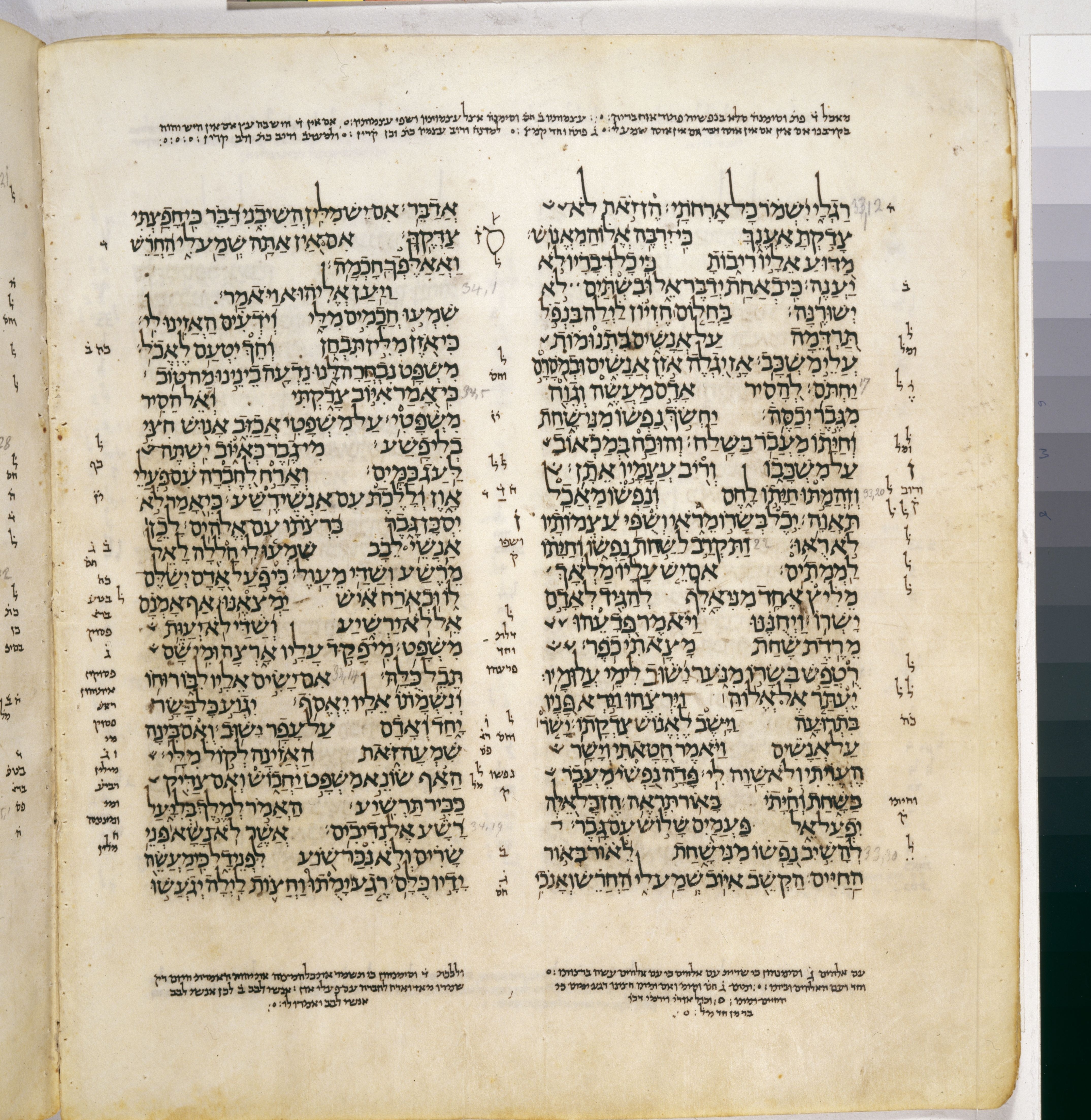
μA (Aleppo) (page 279r, col 1, line 10, word 5):
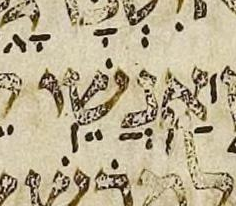
μY (Cambridge 1753) (page 82B, col 1, line 4, word 3):