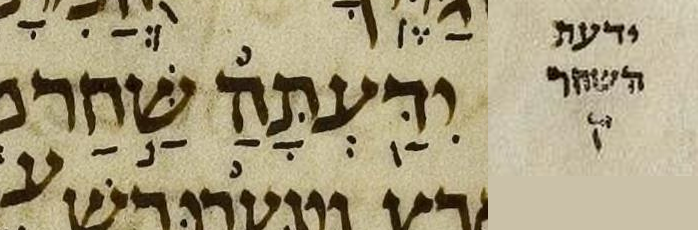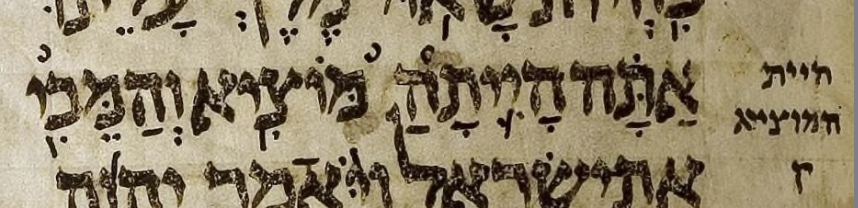
In these word-pairs, “mobile ה” describes the relationship between a he at the end of the first ketiv word and a he at the beginning of the second qere word. The consonantal relationship alone does not determine where the pataḥ belongs.
In 2 Samuel 5:2 and Job 38:12, the פתח belongs to the final mobile ה of the first ketiv word. In Ezekiel 42:9, however, the פתח is unattached; despite a seemingly available mobile ה to attach it to, the naqdan avoids doing so. This word-pair relates the כתיב of ומתחתה לשכות to the קרי of ומתחת הלשכות.
In GAV (guillemet-alef-vav) notation, the unattached pataḥ before the second ketiv word is recorded as:
«אַ»
The alef inside the guillemets is an artificial carrier, not a ketiv consonant. Near-Aleppo stores it in its existing marks-without-letter template. A pataḥ belonging to a written he stays on that he, without guillemets.
For the general GAV explanation, display alternatives, and Unicode discussion, see GAV notation and display.
| Ketiv | Qere | Pointed ketiv (GAV) |
|---|---|---|
| הייתה מוציא | הָיִ֛יתָ הַמּוֹצִ֥יא | הָיִ֛יתָהַ מּוֹצִ֥יא |
View this verse in the Aleppo Codex on Masoretica
| Ketiv | Qere | Pointed ketiv (GAV) |
|---|---|---|
| ומתחתה לשכות | וּמִתַּ֖חַת הַלְּשָׁכ֣וֹת | וּמִתַּ֖חַתה «אַ»לְּשָׁכ֣וֹת |

View this verse in the Aleppo Codex on Masoretica
| Ketiv | Qere | Pointed ketiv (GAV) |
|---|---|---|
| ידעתה שחר | יִדַּ֖עְתָּ הַשַּׁ֣חַר | יִדַּ֖עְתָּהַ שַּׁ֣חַר |