Features of interest · NAEE book links · Dataset documentation
In NAEE (the Near-Aleppo example edition), the pointed ketiv is the primary text, with the pointed qere above it and a curved box or "cartouche" around the ketiv/qere pair. When the qere is wider, the ketiv is centered beneath it.
The qere is a maqaf compound above a shorter ketiv atom.
דָּוִ֔ד אֶת־הֲדַדְעֶ֥זֶר בֶּן־רְחֹ֖ב מֶ֣לֶךְ צוֹבָ֑ה בְּלֶכְתּ֕וֹ לְהָשִׁ֥יב יָד֖וֹ בִּֽנְהַר׃
The single-atom qere has an additional he. The ketiv's final-nun dagesh, tsere and mahapakh are displayed on an artificial dalet carrier immediately after the nun, without a space. Carrier notation usually indicates that marks are orphaned or that the letter they belong to is unclear. In this case, a strong argument can be made that the marks belong to the final nun. We use carrier (orphan) syntax mainly because many fonts have difficulty displaying these marks on a final nun.
הִן«דֵּ֤» אָנֹכִי֙ בָּרָ֣אתִי חָרָ֔שׁ נֹפֵחַ֙ בְּאֵ֣שׁ פֶּחָ֔ם וּמוֹצִ֥יא כְלִ֖י לְמַעֲשֵׂ֑הוּ וְאָנֹכִ֛י בָּרָ֥אתִי מַשְׁחִ֖ית לְחַבֵּֽל׃
The qere has two space-separated atoms above one ketiv atom.
וַתֹּ֥אמֶר לֵאָ֖ה בָּ֣גָ֑ד וַתִּקְרָ֥א אֶת־שְׁמ֖וֹ גָּֽד׃
Ruth 3:5 and Judges 20:13 show qere without ketiv; in Ruth 3:5 there is no orphan niqqud for the qere whereas in Judges 20:13 there is.
Qere without ketiv: manuscript readings and crops
וַתֹּ֖אמֶר אֵלֶ֑יהָ כֹּ֛ל אֲשֶׁר־תֹּאמְרִ֥י «» אֶעֱשֶֽׂה׃
וְעַתָּ֡ה תְּנוּ֩ אֶת־הָאֲנָשִׁ֨ים בְּנֵי־בְלִיַּ֜עַל אֲשֶׁ֤ר בַּגִּבְעָה֙ וּנְמִיתֵ֔ם וּנְבַעֲרָ֥ה רָעָ֖ה מִיִּשְׂרָאֵ֑ל וְלֹ֤א אָבוּ֙ «אְאֵ֣» בִנְיָמִ֔ן לִשְׁמֹ֕עַ בְּק֖וֹל אֲחֵיהֶ֥ם בְּנֵי־יִשְׂרָאֵֽל׃
In MAM, the ketiv יעבור and qere יַעֲבׇר occupy the middle atom of a compound starting with עַד־ and ending with זָֽעַם. NAEE displays עַד־יַעֲבָור־זָֽעַם, with no qere above the middle atom. This follows MAM's note, which reports the ketiv and no qere note in the Aleppo Codex. In forming the near-Aleppo dataset, we inferred the ketiv's pointing from the qere.
Compare this verse in MAM-with-doc
… חֲבִ֥י כִמְעַט־רֶ֖גַע עַד־יַעֲבָור־זָֽעַם׃
The single ketiv atom בנימן has a two-atom qere.
When viewed in context, the ketiv forms a four-atom maqaf compound:
בֶן־בָּנִ֔ימִן־בְּנֵי־פֶ֖רֶץ
In contrast, the qere forms a two-atom maqaf compound followed by a three-atom maqaf compound:
בֶן־בָּנִ֔י מִן־בְּנֵי־פֶ֖רֶץ
עוּתַ֨י בֶּן־עַמִּיה֤וּד בֶּן־עָמְרִי֙ בֶּן־אִמְרִ֣י בֶן־בָּנִ֔ימִן־בְּנֵי־פֶ֖רֶץ בֶּן־יְהוּדָֽה׃
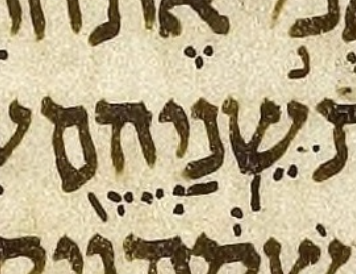
The ketiv has a two-atom euphemistic qere. The Aleppo Codex has no dot of any kind above the ketiv's shin. The manuscript is well preserved here, so the absence is clear. Near-Aleppo retains its current pointing without a shin dot. The shin dot in the Introduction's list needs correction.
The shin has no dot above it in this Aleppo Codex crop at 2 Kings 18:27.
Manuscript observation, screenshot provenance and Introduction comparison
The Introduction correction is tracked in MAM-basics issue 305.
וַיֹּ֨אמֶר אֲלֵיהֶ֜ם רַבְשָׁקֵ֗ה הַעַ֨ל אֲדֹנֶ֤יךָ וְאֵלֶ֙יךָ֙ שְׁלָחַ֣נִי אֲדֹנִ֔י לְדַבֵּ֖ר אֶת־הַדְּבָרִ֣ים הָאֵ֑לֶּה הֲלֹ֣א עַל־הָאֲנָשִׁ֗ים הַיֹּֽשְׁבִים֙ עַל־הַ֣חֹמָ֔ה לֶאֱכֹ֣ל אֶת־חֹרָיהָ֗ם וְלִשְׁתּ֛וֹת אֶת־«אֵ»שֵ֥נַיְ«אֵ»הֶ֖ם עִמָּכֶֽם׃