Qere without ketiv in near-Aleppo
Features of interest · Interesting
ketiv/qere cases · NAEE book links
This document discusses all nine cases of קרי ולא
כתיב in near-Aleppo. In the manuscript, all nine have the expected marginal note containing
the qere letters. Also as expected, none of the nine have any qere or ketiv letters in the body
text, i.e. in the large-lettered main columns of the manuscript. The cases differ in whether, in the
body text:
- niqqud marks are present (only four of the nine cases have niqqud)
- horizontal space is present (only 1 case lacks it: 2 Samuel 18:20)
- a masorah circle is present (only 1 case lacks it: 2 Kings 19:31)
(By definition, when niqqud marks are present, these are “orphan” niqqud, i.e. letterless
niqqud.)
For each case of קרי ולא כתיב, we show the following
in this document:
- An image showing what the case looks like in Aleppo.
- An excerpt of the near-Aleppo example edition (NAEE) showing what the case looks like
there.
- Any MAM notes about the case.
We present the MAM notes not only in their original Hebrew but also in English translation. This
translation also makes the original notes’ abbreviated wording more explicit.
Encoding conventions
Each site has:
- A קרי ולא כתיב template providing the qere.
- One additional template describing the body text.
The additional template records which niqqud, if any, are present and whether horizontal space is
present. The cases use three kinds of additional template:
| Template |
Meaning |
| ניקוד בלי אות |
niqqud with horizontal space above the marks |
| ניקוד בלי אות ובלי רווח |
niqqud without horizontal space above the marks |
| רווח בלי ניקוד |
horizontal space without niqqud |
The phrase “space above the marks” means horizontal space in the line of letters, left between
words or at the end of a manuscript line. At a line ending, that horizontal space may have been left
on purpose or may be accidental. The end-of-line cases here are Judges 20:13 and Ruth 3:17. None of
the cases discussed here is at the start of a manuscript line.
The niqqud templates are specific to near-Aleppo. Their payloads use artificial carrier letters
to hold the marks; those carriers are not written manuscript letters. The carrier can be alef, vav,
or, rarely, dalet. At 2 Kings 19:31, an artificial vav carries the orphan
ḥolam dot:
{{ניקוד בלי
אות|אְאָא֖וֹ}}
The additional template immediately precedes the קרי ולא
כתיב template, with no intervening separator. The example edition displays artificial carriers
or empty double guillemets below the qere in the same rounded-edge box or “cartouche” that it uses
for normal ketiv/qere cases. The box and artificial carriers are editorial display conventions;
their widths do not measure manuscript spacing.
Case summary
In column “N”, N marks niqqud in the body text;
blanks mean no niqqud. In column “H”, ∅ marks the absence of horizontal space in the line of
letters; blanks mean space is present. In column “Pos.”, EOL marks the end of a manuscript line;
blanks mean between written words.
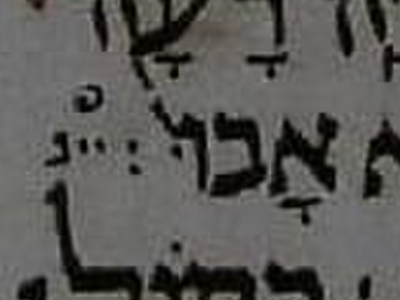
This Aleppo Codex image shows the body text at Judges 20:13.
Near-Aleppo encoding
ניקוד בלי אות: The additional template records
sheva, tsere, and
munaḥ, with no dagesh, and horizontal
space above these marks.
NAEE excerpt
… אָבוּ֙
«אְאֵ֣»
בִנְיָמִ֔ן …
Aleppo manuscript reading
In cases of qere without ketiv, dagesh marks are never included.
The line ending provided space for the marks, possibly accidentally.
mgketer.org ·
MAM verse and
notes ·
masoretica-aleppo
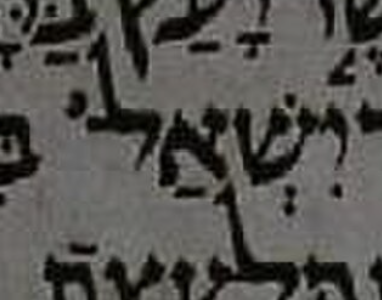
This Aleppo Codex image shows the body text at 2 Samuel 16:23.
Near-Aleppo encoding
רווח בלי ניקוד: The additional template records
horizontal space without niqqud.
NAEE excerpt
… כַּאֲשֶׁ֥ר
יִשְׁאַל־«»
בִּדְבַ֣ר …
MAM doc-note
יִשְׁאַל־[אִ֖ישׁ]
יש רווח צר בלבד ואין ניקוד לתיבה "אִ֖ישׁ" הנקראת ולא
נכתבת.
English translation and explanation of the MAM doc-note
There is only a narrow space, and no pointing for
אִ֖ישׁ, which is read but not written.
Additional manuscript remarks
The below-marks of איש (ḥiriq and
tipeḥa) could have easily fit underneath the maqaf and/or the space
after it, but the naqdan declined to provide those below-marks. MAM’s description of the space as
“narrow” is slightly puzzling, unless we take “narrow” to refer to the space that would be needed
for the (implied) letters rather than the smaller space needed to fit the below-marks.
mgketer.org ·
MAM verse and
notes ·
masoretica-aleppo
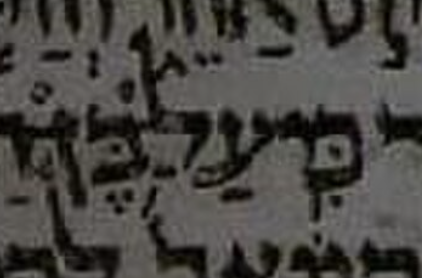
This Aleppo Codex image shows the body text at 2 Samuel 18:20.
Near-Aleppo encoding
ניקוד בלי אות ובלי רווח: The additional template
records tsere and merkha, with no
dagesh or horizontal space above the marks. An artificial alef has
both marks.
NAEE excerpt
… תְבַשֵּׂ֔ר
כִּֽי־עַל־«אֵ֥»
בֶּן־הַמֶּ֖לֶךְ …
MAM doc-note
[כֵּ֥ן]
א=אין רווח לתיבת "כֵּ֥ן" הנקראת ולא נכתבת, אבל נכתבו הצֵרי והמרכא (ולא
הדגש, כצפוי) בין התיבות למטה.
English translation and explanation of the MAM doc-note
In the Aleppo Codex, there is no space for כֵּ֥ן,
which is read but not written, but the tsere and
merkha are written below, between the surrounding written atoms (not
the dagesh, as expected).
mgketer.org ·
MAM verse and
notes ·
masoretica-aleppo
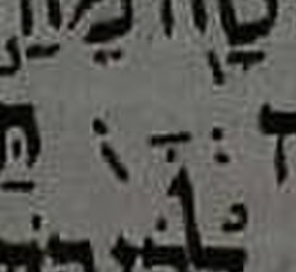
This Aleppo Codex image shows the body text at 2 Kings 19:31.
Near-Aleppo encoding
ניקוד בלי אות: The additional template records
sheva, qamats,
tipeḥa, and an orphan ḥolam dot, with
horizontal space above the marks. Three artificial alef letters carry the below-marks, followed by
an artificial vav carrying the ḥolam dot.
NAEE excerpt
… יְהוָ֥ה
«אְאָא֖וֹ»
תַּעֲשֶׂה־זֹּֽאת׃
Aleppo manuscript reading
The gap here is generous compared with the manuscript’s usual small or nonexistent spaces between
atoms, so it is pretty clear that the letter-scribe intended to leave a large gap, perhaps even one
large enough to fit the (implied) qere letters.
mgketer.org ·
MAM verse and
notes ·
masoretica-aleppo
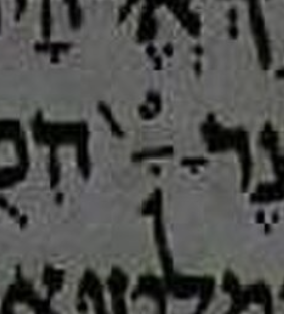
This Aleppo Codex image shows the body text at 2 Kings 19:37.
Near-Aleppo encoding
ניקוד בלי אות: The additional template records two
qamats marks and pashta, with
horizontal space above the marks.
NAEE excerpt
… וְשַׂרְאֶ֤צֶר
«אָאָא֙»
הִכֻּ֣הוּ …
Aleppo manuscript reading
The marks occupy a large horizontal space between the surrounding written atoms, presumably left
intentionally by the letter-scribe.
mgketer.org ·
MAM verse and
notes ·
masoretica-aleppo
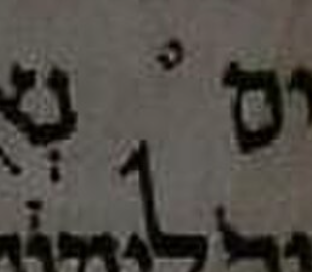
This Aleppo Codex image shows the body text at Jeremiah 31:37.
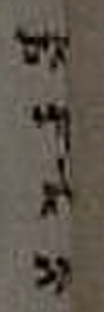
This Aleppo Codex image shows the marginal qere note at Jeremiah 31:37.
Near-Aleppo encoding
רווח בלי ניקוד: The additional template records the
generous horizontal space without niqqud.
NAEE excerpt
…
יָמִ֥ים
«»
נְאֻם־יְהוָ֑ה …
MAM doc-note
יָמִ֥ים [בָּאִ֖ים]
נְאֻם־יְהֹוָ֑ה =ל,ק ובדפוסים
- א=הִנֵּ֛ה יָמִ֥ים [] נְאֻם־יְהֹוָֽה (חסר ניקוד ברווח המיועד ל"קרי ולא כתיב")
- הערת ברויאר
- קורן, ברויאר, סימנים, מכון ממרא
English translation and explanation of the MAM doc-note
MAM agrees with the qere implied by all of the following: the Leningrad Codex, the Cairo Codex of
the Prophets, and the printed tradition.
The Aleppo Codex has the following body text:
הִנֵּ֛ה יָמִ֥ים [] נְאֻם־יְהֹוָֽה
Pointing is not present in the space intended for “qere without ketiv”.
Breuer’s note.
Koren, Breuer, the Simanim Tanakh, and Mechon Mamre.
Additional manuscript remarks
The damage to the marginal qere note looks as if opaque tape had been laid parallel to the right
margin, obscuring approximately the first letter of each inferred word on its own line. The cause of
the damage is unknown. The tape comparison describes how the damage looks; it does not propose a
mechanism.
The marginal qere note is inferred to have one word per line:
mgketer.org ·
MAM verse and
notes ·
masoretica-aleppo
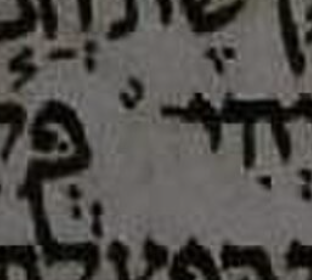
This Aleppo Codex image shows the body text at Jeremiah 50:29.
Near-Aleppo encoding
רווח בלי ניקוד: The additional template records the
generous horizontal space without niqqud. The preceding maqaf extends
into the space.
NAEE excerpt
… סָבִ֗יב
אַל־יְהִי־«»
פְּלֵיטָ֔ה …
MAM doc-note
אַל־יְהִי־[לָהּ֙] פְּלֵיטָ֔ה
א-כתיב=אַל־יְהִי־[֯] פְּלֵיטָ֔ה (רווח ריק בלי ניקוד וטעמים, ולמעלה
עיגול מסורה)
English translation and explanation of the MAM doc-note
The Aleppo Codex has the following pointed ketiv, i.e. the following body text:
אַל־יְהִי־[֯] פְּלֵיטָ֔ה
There is an empty space without vowel points or cantillation marks, with a masorah circle
above.
mgketer.org ·
MAM verse and
notes ·
masoretica-aleppo
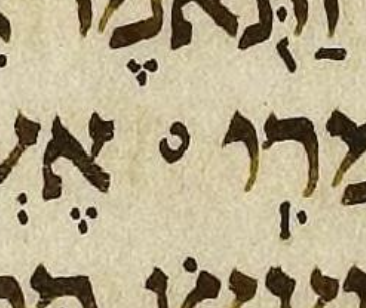
This Aleppo Codex image shows the body text at Ruth 3:5.
Near-Aleppo encoding
רווח בלי ניקוד: The additional template records the
generous horizontal space without niqqud.
NAEE excerpt
… אֲשֶׁר־תֹּאמְרִ֥י
«»
אֶעֱשֶֽׂה׃
MAM doc-note
[אֵלַ֖י]
=ל-קרי
- בכתר יש רווח ניכר ובו עיגול מסורה להערה "אלי קרי", אבל חסרים ניקוד וטעמים לתיבה הנקראת ולא
נכתבת.
English translation and explanation of the MAM doc-note
MAM’s qere agrees with the qere implied by the Leningrad Codex.
(φ1)
In the Aleppo Codex there is a noticeable space containing a masorah circle referring to the
marginal note “אלי קרי”, but the vowel points and cantillation marks
for the qere, which is read but not written, are not present.
mgketer.org ·
MAM verse and
notes ·
masoretica-aleppo
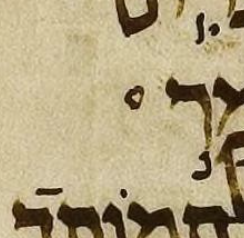
This Aleppo Codex image shows the body text at Ruth 3:17.
Near-Aleppo encoding
רווח בלי ניקוד: The additional template records the
generous horizontal space at the end of the manuscript line, without niqqud.
NAEE excerpt
… אָמַ֣ר
«»
אַל־תָּב֥וֹאִי …
MAM doc-note
[אֵלַ֔י]
=ל-קרי
- בכתר יש רווח ניכר ובו עיגול מסורה להערה "אלי קרי ולא כתב", אבל חסרים ניקוד וטעמים לתיבה הנקראת
ולא נכתבת.
English translation and explanation of the MAM doc-note
MAM’s qere agrees with the qere implied by the Leningrad Codex.
(φ1)
In the Aleppo Codex there is a noticeable space containing a masorah circle referring to the
marginal note “אלי קרי ולא כתב”, but the vowel points and
cantillation marks for the qere, which is read but not written, are not present.
Additional manuscript remarks
The line ending may account for the generous space, possibly accidentally.
mgketer.org ·
MAM verse and
notes ·
masoretica-aleppo
Sometimes it is not clear what a note means when it says, for example
“=ל-קרי”. We translate that as “MAM’s qere agrees with the qere
implied by the Leningrad Codex.” But it is important to note that by “agrees” here we don’t mean
“equals” so much as “is consistent with”. I.e. what we mean is “MAM’s qere is consistent with the
qere implied by the [body niqqud (if any) and marginal qere letters of the] Leningrad Codex.”