This is the first article in a series. The series is about errors in BHS and/or WLC. The other articles in the series are as follows:
In many popular editions of the Hebrew Bible, Deut. 12:30’s לאמר is accented with a qadma on its mem, as shown below:
לֵאמֹ֨ר
There’s nothing remarkable about this, except that it is wrong.
We will investigate the following:
Answering these questions for this particular case will yield general insights into the ongoing project of standardization and preservation of the Hebrew Bible. As scrolls from Qumran show, this project did not start with the Masoretes. But this project achieved great maturity under their stewardship. As we moved from their handwritten codices to printed and digital editions, both corrections and errors came to be propagated more faithfully and widely than ever before.
It is the continuing responsibility of each generation of stewards (scholars and publishers) to make sure that, on balance, corrections outnumber errors. Only in this way can we preserve at least the degree of standardization that the Masoretes achieved. This seems like it should be easy for us, given the technologies we have at our disposal. Yet, this goal has proved difficult to achieve, and at this point in time, I am unclear who is winning, the errors or the corrections.
Getting back to the particular case, why do I make the bold claim that this qadma is wrong? Usually I would couch my judgments about an edition of the Hebrew Bible in less extreme terms, e.g. “unlikely to have been the intention of the scribe” rather than “wrong.” But this situation is extreme. First of all, a qadma doesn’t make sense here, in context:
לאמ֨ר איכ֨ה יעבד֜ו
This would be the only case in the Hebrew Bible in which a qadma is followed immediately by another qadma, i.e. with no intervening accent. On the other hand, lots of things happen only once in the Hebrew Bible. So, this accent can’t be deemed wrong just because it contradicts what we (think we) know about the grammar of accents. But, this accent’s contradiction of grammar should certainly make us suspicious, and send us looking for evidence in as many reputable manuscripts as possible.
I should add that, for all we know at this point in the story (in the way I’m choosing to tell this story) maybe it is this accent’s context that is wrong, not this accent itself! Or, again, maybe nothing’s wrong with either this accent or its context. In that case, the only thing wrong is our grammar of accents, which needs to be updated to accept this exception. The bottom line is, we need to consult some manuscripts.
First let’s consult the Leningrad Codex (henceforth ל). If we find that ל has a qadma, that is important to know, but that fact alone would not vindicate editions having qadma. It would merely mean that they agree with ל. It is a common mistake to believe that agreement with ל constitutes correctness. It only constitutes correctness for a strictly diplomatic edition of ל, like BHS.
(No strictly diplomatic edition of ל should be popular, because such an edition should be of scholarly interest only. Unfortunately, in practice, this is not the case. BHS and its close derivatives are very popular. I would even say that they are not just popular but dominant within certain contexts. I cannot fault BHS for becoming popular, but I can fault its users (including the publishers of close derivatives) for making it popular by putting it to use in ways that are inappropriate or misleading.)
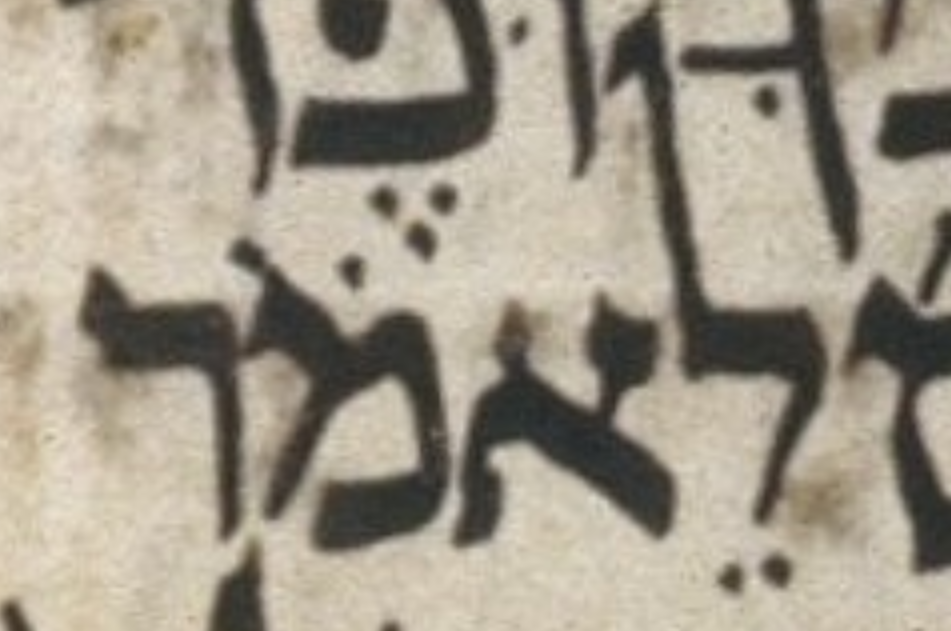
The preceding ideological tangent is, fortunately, irrelevant to the case at hand since inspection of the color image of the relevant page of ל reveals that the accent is not qadma, as can be seen below.
The quality of the image and the quality of the text here are both high enough to establish, with high confidence, that the mem in question has two above-marks, which are, from right to left, a revia dot and a ḥolam dot. The ḥolam dot has two non-ideal properties, which we list below.
The above two non-ideal properties of the ḥolam dot are where all the confusion lies about this word. Here’s what the 1997 (most recent) BHS has, though I suspect this error predates the 1997 edition:
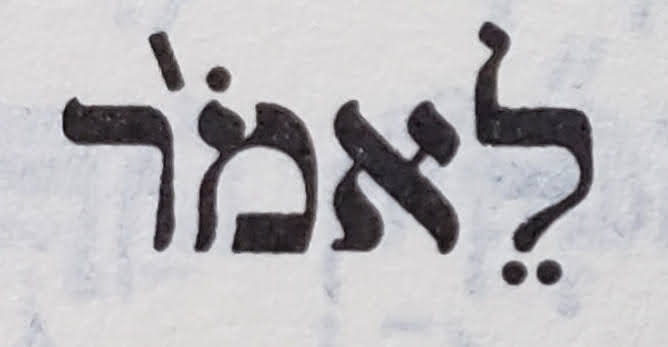
BHS chooses to interpret these two marks in ל as, right to left, an oddly “early” ḥolam dot followed by an “illegal” pashta. It is important to note that this pashta is “illegal” according to the intra-word grammar of accents, not the inter-word grammar mentioned above. In particular, pashta is supposed to be a postpositive accent, which means that in cases like this, where there is only one pashta on a word, that pashta is constrained to be above (and usually “late” on) the last letter of that word. So in this case we would expect pashta to be above and late on resh, not above and late on mem (or above and early on resh).
The following black and white image sheds some light on why BHS may have made this error:
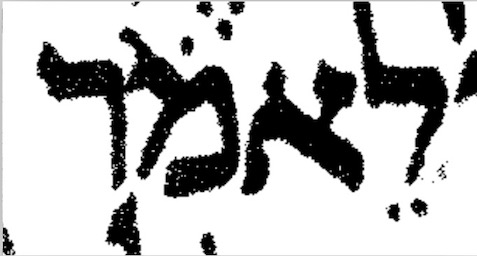
This image is probably worse than what BHS editors had access to, but its lack of color and its low resolution are probably illustrative of the source of the confusion. (We assume that the BHS editors did not have access to color images, and I’m unsure whether they had access to high-resolution images.)
While the BHS editors’ mistake is unfortunate, they made a commendable effort to represent, in type, something close to what they (thought they) were seeing. I don’t know whether the particular person responsible for this transcription knew that such a use of pashta was “illegal.” Even if they knew it was illegal:
Note that though the BHS editors tried to represent the precise location of the accent, they “sanitized” the location of the ḥolam dot. This is all part of the delicate job of a transcriber: to abstract away some details of the manuscript, while retaining others. These decisions depend somewhat on the judgment of the transcriber but depend on the technology being transcribed to. So, for example, for all I know, an “early” ḥolam was desired by the transcriber, but could not be realized since it was too hard to typeset.
Now we can trace (or at least speculatively trace) the propagation of this error from BHS to other editions, across the decades. (It would be interesting to see how far back in BHS’ history this error goes, but it is beyond the scope of this study to do so. As I mentioned, I speculate that this error exists in editions of BHS long prior to 1997.)
Interestingly, this error was not propagated faithfully. It remained an error, i.e. it was not corrected, but this pashta became a qadma at some point. Qadma is still an error, since the accent on mem should be a revia, but it is a different error.
My guess is that the BHS pashta became a qadma during the transcription of BHS to digital form in the Michigan-Claremont Westminster text, later known as the Westminster Leningrad Codex (WLC). In detail, this word became:
L " / ) M O 63 R
These codes mean, respectively, lamed (L), tsere ("), morphology division (/), alef (closing parenthesis), mem (M), ḥolam dot (O), qadma (63), and resh (R). In WLC 4.22, the most recent release of WLC as of this writing, the accent has been fixed to be revia. The word is now L"/)MO81R (note “81” as opposed to “63”). But, I will continue to discuss the erroneous version of this word that appears in WLC 4.20 and previous versions, because unfortunately 4.22 has had little “take-up” as of yet, and the mistake in previous versions of WLC has already propagated to many paper editions.
My guess is that the mark I am calling “BHS’s pashta” was interpreted by the WLC transcriber not as a pashta located in a strange place within the word but as a qadma located in a reasonable place within the word but in a strange micro-location in relation to its letter (mem). In other words, the WLC transcribers interpreted this mark in BHS as an oddly late-on-the-mem qadma rather than an oddly early-in-the-word pashta. BHS had the luxury (or pitfall) of transcribing such a mark ambiguously, because, on paper, no such distinction can be made between these two interpretations of the mark. (That is, no such distinction can be made, given that BHS’s font makes no distinction between the shape of pashta and qadma).
WLC has no such luxury of ambiguity; its representation is an abstract one in which pashta or qadma must be chosen. Given that WLC has no way to qualify a qadma as “late,” if the transcriber of BHS feels that this mark is a “late” qadma in BHS, the transcriber must, logically, drop the “late” part but retain the identity of qadma. (It is perhaps interesting to note that WLC followed BHS in painstakingly preserving three “flavors” of meteg (aka gaʿya): early, middle, and late. No modern scholar I am aware of maintains that these distinctions are meaningful, but perhaps this was not well-established in the 1970s when BHS was first completed.)
It is an important rule of transcription to a dataset (observed here by WLC but often violated elsewhere) that one not use the wrong accent to mimic the right position, in pairs of accents that look similar in most fonts, like pashta and qadma. This is a major difference in the requirements for the digital encoding of texts intended merely for printing as opposed to the digital encoding of texts intended for use as a dataset, i.e. intended for use in a variety of (probably unknown) ways. A text meant only to be printed on paper (or displayed on a website) in a known font can “cheat” (either by accident or on purpose) and do anything underneath in the encoding that ends up looking right (or looking close enough to right) when printed or displayed. This is decidedly not true of a dataset. Here is an example of a change in Leviticus 1:3 that I proposed to UXLC (later accepted) involving another pair of accents that look similar in most fonts, geresh and geresh muqdam.
WLC itself used to “cheat” by using the code for qadma (63) to represent the first of two pashta marks on a word, when a word has two such marks. (I usually refer to this first mark as the “stress-helper” pashta, but there is no standard term for this first pashta.) Then at some point WLC introduced a new, dedicated accent code, 33, for stress-helper pashta. This development is laudable, and I wish Unicode had an analogous code point.
Unicode texts either “cheat” and use qadma or they use pashta both for the primary (i.e. final) mark and the stress-helper mark. This second strategy, using pashta in both places, is preferable to “cheating,” but it is still not ideal since it places a burden on every font supporting Biblical Hebrew. The font is burdened because it must determine, from context, which of the two types of pashta it should display. Most fonts need to distinguish the two types of pashta because most fonts “want” to position the stress-helper pashta centrally. I.e. they “want” to position it more like a qadma.
In contrast, BHS does not position the stress-helper pashta centrally. Indeed the WLC documentation specifies that accent 33, stress-helper pashta, represents a pashta written “after the letter not over it (unlike the [qadma]).” This reflects WLC’s original (and still primary) role as a transcription of BHS, not of ל. I am not aware of any study of the position of stress-helper pashta in ל, in my experience, it is roughly central or at a minimum, inconsistent.
So, in WLC, this word might have been re-coded from 63 (qadma) to 33 (stress-helper pashta) when 33 was introduced. This would have more accurately reflected the contents of BHS, and would have been “less illegal” than a primary pashta (03) since a primary pashta should never appear on a non-final letter. The word as a whole would have still been illegal since any word with a stress-helper pashta should also have a primary pashta. And in any case, whether 03, 33, or 63 were used, the word would still not represent the contents of ל.
In 2007, BHQ, the still-in-progress successor to BHS, put this mark in the standard location for qadma: centered above the mem. Whether BHQ did this independently of WLC or because of WLC, I don’t know.
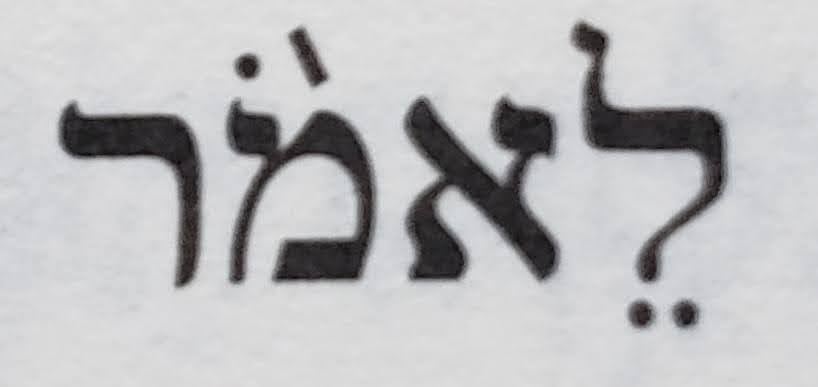
BHQ’s treatment of this word is arguably worse than BHS’s, since BHS, though in error, at least looks weird, giving the reader a clue that something weird is going on. BHQ “sanitizes” BHS’s error away. We are left with only the odd inter-word grammar (two qadma marks in a row) as a clue as opposed to BHS where we have odd intra-word grammar (oddly-late-on-its-letter qadma or oddly-early-in-its-word pashta). I.e. in BHS, the word itself gives us a clue that something fishy may be going on.
Jumping back from 2007 to 2000, JPS’s Hebrew-English Tanakh (HET), like BHQ, has a normally-positioned qadma:
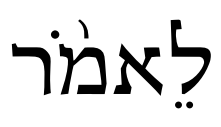
It is not surprising that the HET has this since though its Hebrew text is a heavily-corrected version of WLC, most of its corrections come from sources identifying anomalies in ל, not errors in BHS or WLC. And those sources, such as the work of Breuer and Dotan, do not comment upon this word, presumably because, even though I think they lacked access to color images, they gave the marks on the mem the unremarkable interpretation of revia and ḥolam respectively, from right to left.
This word appears incorrectly in all editions close to WLC, such as these two notable digital ones:
Let’s look at this word in the Damascus Pentateuch aka Sassoon 507 (page 404, column 3, last line):
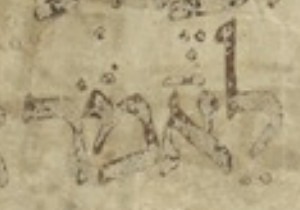
The text is not in great shape here but it is of sufficient quality to confirm, with high confidence, the revia and ḥolam dots over the mem. The bullet list below contains some additional remarks on this image. (I allow myself these digressions since part of my aim here is to highlight some general issues in manuscript transcription.)
What does it mean for one or more manuscripts to confirm our reading of ל? The answer is pretty clear for an eclectic edition of the Hebrew Bible, but the answer is less clear, i.e. the question is more interesting, for an ל-diplomatic edition. For that more interesting case, the question becomes: to what extent should we allow our transcription of ל to be influenced by what we find in other manuscripts? There is no clear-cut answer. The impulse to harmonize is strong, not only to harmonize within a manuscript but also between manuscripts. While there’s good reason to resist this impulse, the impulse is not wrong per se. With respect to accents for example, it is clear that these manuscripts arise from a highly standardized chanting tradition. So while we should not stretch too far to see ל match as matching other manuscripts, neither should we insist that a word be interpreted without influence from other manuscripts.
Let’s look at this word in a third manuscript, Sassoon 1053 (recently sold for $38.1 million) (page 168, column 3, line 1):
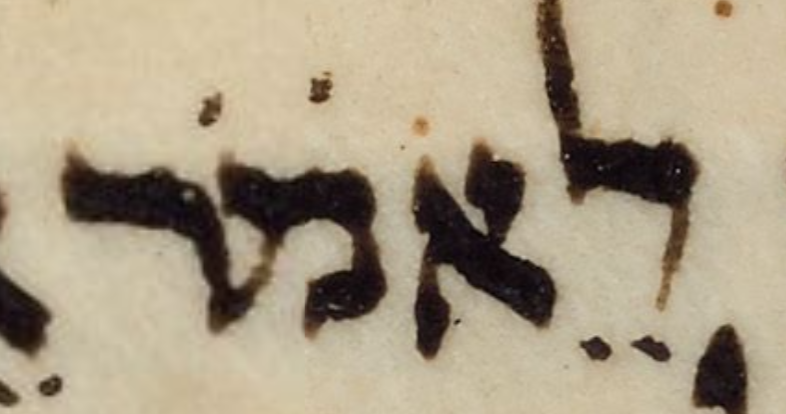
(Apologies for cutting off the luxuriantly-long ascender of the lamed but it seemed impractical to include it.) (Thanks to the Institute for Hebrew Bible Manuscript Research for providing these images in indexed form, making it easy to find which image contains a given verse.)
The image confirms, with high confidence, the revia and ḥolam dots over the mem. (There is a light brown dot above the left “arm” of the alef; I consider it not ink, or in any case not intentional.)
The word appears correctly in the 2005 URJ ḥumash:
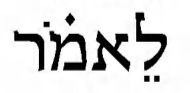
It appears correctly in Dotan’s BHL, in the Keter Yerushalayim, and in editions by Koren and Simanim.
This word appears correctly in MAM, a liberally-licensed dataset of the Hebrew Bible used in various editions. Characteristically, it is not only correct in MAM, but the error in other editions is documented in MAM.
This error is an example of a general pattern in which it seems that the best way to avoid the long shadow of BHS errors is to use editions made in Israel, where BHS’s influence seems to be far less than elsewhere.
This error was corrected in UXLC in early 2022, almost four years ago. The editors of UXLC received this correction from a Sefaria user, Yedidya Darshan. (At the time, the tanach.us version of WLC was Sefaria’s default Tanakh.) This correction was submitted to the Groves Center, and appeared in WLC 4.22. Notable digital publishers seem to take no interest in updating their close-to-WLC texts with corrections from either UXLC or WLC 4.22. Their close-to-WLC texts seem frozen. Such publishers include Oak Tree (Accordance) and Faithlife (Logos).
To summarize our answers to the questions posed at the start: